
Top 10 Lithium Solar Batteries for Global Buyers
As solar adoption expands, storage is becoming the quiet control room behind reliable electricity. The International Energy Agency’s Batteries and Secure Energy Transitions report states that global energy storage capacity must increase sixfold by 2030. It could reach 1,500 GW under the net-zero pathway. Batteries will provide most of that growth. Lithium-ion systems already dominate new stationary storage. They offer high efficiency, compact design, and increasingly competitive costs. However, chemistry names alone do not guarantee value. A battery beside a rooftop inverter faces heat, dust, cycling, and uneven daily demand.
This guide evaluates the Top 10 Lithium Solar Batteries for Global Buyers through practical purchasing criteria. We compare usable capacity, continuous power, round-trip efficiency, warranty coverage, safety controls, monitoring, installation flexibility, and service support. IRENA’s Electricity Storage and Renewables report highlights how performance depends on system design, operating conditions, and local electricity needs. That matters in a humid coastal home, a remote clinic, or a warehouse with evening demand peaks. A 10 kWh label may provide less usable energy after reserve settings and temperature limits. Read the fine print.
Details matter.
BloombergNEF’s 2024 Energy Storage System Cost Survey also shows how quickly prices, supply chains, and battery technologies are changing. Therefore, this comparison is a buying framework, not a permanent verdict. Some product specifications remain difficult to compare across regions. That is an important limitation. We identify unclear warranty language, regional certifications, software restrictions, and installer requirements where possible. Buyers should verify current datasheets and local compliance before purchasing. The largest battery is not always the strongest choice. A reliable system should match real loads, climate, safety needs, and budget. Even this approach deserves review as markets evolve.
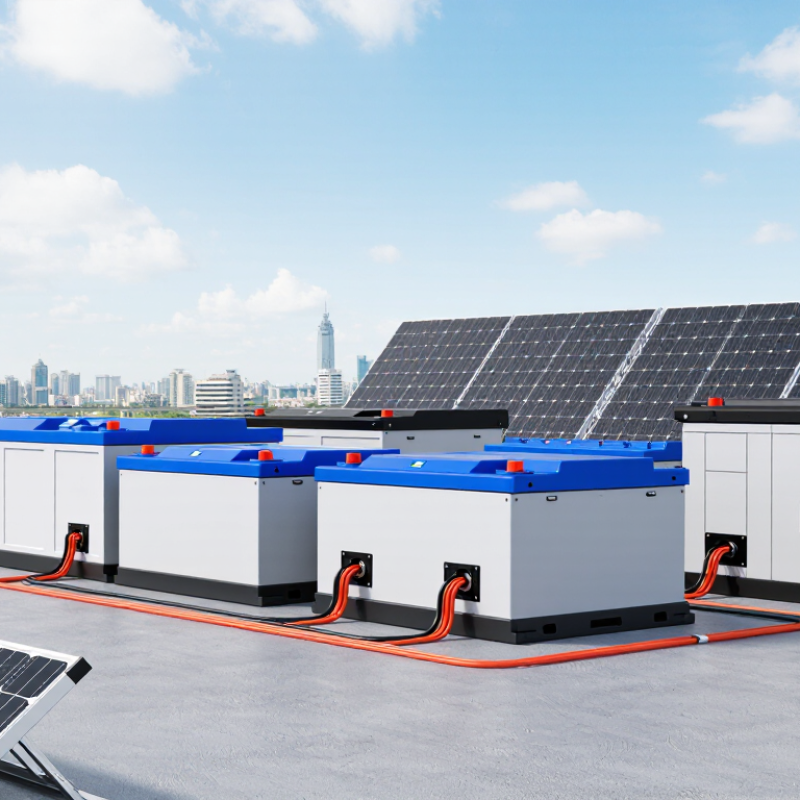
What Lithium Solar Batteries Are and How They Work
Lithium solar batteries store electricity generated by photovoltaic panels for later use. They are rechargeable devices, not fuel tanks. During daylight, solar panels produce direct current, and a charge controller manages its flow into battery cells. Inside each cell, lithium ions move between electrodes through an electrolyte. This movement stores energy and releases it when power is needed.
When a home uses electricity at night, the battery sends direct current to an inverter. The inverter changes it into alternating current for lights, appliances, or equipment. A battery management system monitors voltage, temperature, current, and cell balance. It can reduce charging or disconnect the system when conditions become unsafe. Lithium iron phosphate cells are widely considered stable for solar storage, but chemistry alone does not guarantee safe operation.
Capacity is measured in kilowatt-hours, while output is measured in kilowatts. A 10-kilowatt-hour battery may not deliver its full rated capacity every day. Usable energy depends on discharge limits, temperature, inverter losses, and aging. Cold weather can slow charging. Heat can shorten service life. That detail is easy to overlook. A practical buyer should check installation standards, warranty terms, ventilation needs, and local grid rules. I once treated capacity as the main buying factor, but that view was incomplete. Daily load patterns and backup priorities often matter more.
| Rank | Battery Configuration | Typical Chemistry | Common Nominal Size | Usable Depth of Discharge | Round-Trip Efficiency | Typical Cycle Life | Recommended Solar Application | How It Works |
|---|---|---|---|---|---|---|---|---|
| 1 | 48 V Modular Home Storage Battery | LFP Lithium iron phosphate |
4.8–5.1 kWh per module 48 V, 100 Ah class |
80–90% | 90–95% | 3,000–6,000 cycles | Residential solar systems, backup power, and self-consumption | Solar electricity is stored as lithium ions move into the graphite anode during charging. During discharge, the ions return through the electrolyte while electrons flow through the external circuit to power loads. |
| 2 | High-Voltage LFP Battery System | LFP Lithium iron phosphate |
10–30 kWh per system 150–500 V battery range |
85–95% | 92–97% | 4,000–8,000 cycles | Large homes, hybrid inverters, and small commercial installations | Multiple cells and modules are connected in series to create a higher DC voltage. The battery management system balances cells and coordinates charging, discharging, temperature, and protection limits. |
| 3 | 48 V Rack-Mount Solar Battery | LFP Lithium iron phosphate |
2.4–5.1 kWh per rack unit 48 V, 50–100 Ah class |
80–90% | 90–95% | 3,000–6,000 cycles | Off-grid cabins, telecommunications sites, and expandable energy storage | Standardized battery modules are installed in parallel to increase energy capacity. Communication between the battery management system and inverter helps control current, voltage, and state of charge. |
| 4 | 12 V LiFePO4 Deep-Cycle Battery | LFP Lithium iron phosphate |
1.28–2.56 kWh per battery 12.8 V, 100–200 Ah class |
80–90% | 90–95% | 2,500–5,000 cycles | Small solar systems, RVs, boats, lighting, and low-power backup | Four LFP cells are commonly connected in series to form a nominal 12.8 V battery. An internal management circuit protects the cells from overcharge, over-discharge, excessive current, and unsuitable temperature. |
| 5 | Commercial Cabinet Energy-Storage Battery | LFP Lithium iron phosphate |
50–215 kWh per cabinet High-voltage DC architecture |
80–90% | 88–95% | 4,000–8,000 cycles | Peak shaving, demand management, solar smoothing, and microgrids | Battery racks store surplus solar energy and release it during high-demand periods. An energy-management system coordinates the battery, inverter, cooling equipment, fire protection, and grid connection. |
| 6 | Portable Solar Power Station | LFP Lithium iron phosphate |
0.3–3.0 kWh per unit 12–48 V internal architecture |
80–90% | 80–92% | 2,000–4,000 cycles | Emergency power, outdoor use, temporary work sites, and mobile solar charging | A built-in charge controller converts solar-panel output into a controlled battery-charging current. An inverter then converts stored DC electricity into AC power for compatible appliances. |
| 7 | Compact High-Energy Lithium Battery | NMC Lithium nickel manganese cobalt oxide |
1–10 kWh per module or pack 12–48 V class |
75–90% | 90–95% | 1,500–3,000 cycles | Space-limited mobile systems and applications requiring high energy density | NMC cells store more energy for their size and weight than many LFP designs. They require carefully managed voltage and temperature limits because their thermal stability is generally lower than LFP chemistry. |
| 8 | Long-Life Lithium-Titanate Battery | LTO Lithium titanate |
2–50 kWh per system 24–800 V system range |
85–95% | 92–98% | 10,000–20,000 cycles | High-cycle solar applications, harsh climates, and rapid-charge systems | LTO cells use a lithium-titanate anode instead of the conventional graphite anode. This supports very high cycle life and strong low-temperature performance, although the technology normally has lower energy density and higher cost. |
| 9 | Marine and Recreational Solar Battery | LFP Lithium iron phosphate |
1.28–5.12 kWh per battery 12.8 or 25.6 V class |
80–90% | 90–95% | 2,500–5,000 cycles | Marine electronics, onboard appliances, recreational vehicles, and remote cabins | Solar panels recharge the battery through a solar charge controller, while a DC distribution system supplies appliances. A battery management system disconnects the pack when electrical or thermal limits are exceeded. |
| 10 | Second-Life Lithium Solar Storage Pack | LFP or NMC Repurposed lithium-ion cells |
5–100 kWh per assembled system | 60–80% | 85–93% | Remaining life varies; commonly 1,000–3,000 additional cycles | Low-cost stationary storage where space and certification requirements are manageable | Used cells are tested, grouped by condition, and assembled into a stationary battery pack. Cell monitoring, thermal protection, capacity testing, and conservative operating limits are essential for safe operation. |
Important: Actual performance depends on cell quality, battery-management settings, inverter compatibility, charging temperature, installation conditions, and operating power. Lithium batteries should be installed and commissioned according to applicable electrical and fire-safety standards.
Related Posts
-

What Is a Lithium Solar Battery and How Does It Work?
-

Why Choose Solar Battery Storage for Global Buyers?
-
Top Benefits of Lithium Car Battery Technology for Electric Vehicles?
-

2026 Top Lithium Battery Innovations and Trends to Watch?
-
How to Choose the Best Lithium Battery for Your Needs?
-
Power Energy Battery Tips for Efficient Sourcing and Use?