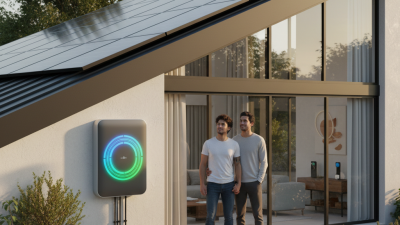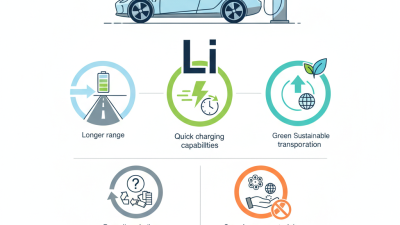
Lithium Solar Batteries store electricity produced by solar panels for later use. During bright daylight, panels generate direct current, and a charge controller manages its flow into the battery. The battery stores that energy through reversible chemical reactions inside lithium-based cells. When sunlight fades, an inverter converts the stored direct current into alternating current for household appliances.
The process seems simple. It is not always simple. A battery management system monitors cell voltage, temperature, and current during every cycle. This protection helps prevent overheating, overcharging, and excessive discharge. Many modern systems use lithium iron phosphate chemistry because it offers strong thermal stability and a long service life. However, chemistry alone does not guarantee safety or performance. Installation quality matters.
In practical use, a homeowner may charge a battery at noon, then power lights, refrigeration, or networking equipment after sunset. Usable capacity depends on the battery’s size, discharge limit, age, temperature, and inverter efficiency. Manufacturers publish test results, but real homes rarely match laboratory conditions. That difference deserves attention. Professional sizing should consider daily energy demand, backup priorities, local weather, ventilation, and future electricity use. Reliable systems also include clear monitoring and maintenance guidance. Although lithium batteries often cost more initially, their efficiency and cycle life can support long-term value. Still, every project has limits, and claims of unlimited storage or perfect reliability should be questioned. Understanding how Lithium Solar Batteries work helps buyers compare specifications realistically and choose equipment suited to their actual energy needs.

A lithium solar battery stores electricity through reversible chemical reactions inside lithium-ion cells. During daylight, a charge controller directs surplus solar power into the battery. Lithium ions move through an electrolyte from the positive electrode to the negative electrode. At night, that movement reverses and produces usable current.
The battery pack contains several core components. Cells provide energy storage. A battery management system monitors voltage, temperature, and state of charge. It can disconnect the pack when conditions become unsafe. A thermal system limits heat buildup, while a protective enclosure resists dust and moisture. An inverter changes battery power into household alternating current. Without it, most appliances cannot use the stored electricity.
The chemistry matters. Lithium iron phosphate cells usually offer strong thermal stability and long cycle life. Other lithium chemistries may provide higher energy density, but trade-offs remain. Real performance depends on temperature, charging limits, installation quality, and daily depth of discharge. That is where simple product comparisons become misleading.
The International Energy Agency reported about 42 gigawatts of new battery storage additions in 2023, nearly double the previous year. Its 2024 Batteries and Secure Energy Transitions report also projects rapidly expanding battery demand through 2035. NREL’s 2024 Annual Technology Baseline shows falling storage costs, although future values remain uncertain. Numbers vary by region. Field conditions rarely match laboratory claims.
Solar energy is stored when photovoltaic panels send direct current to lithium-ion cells. A charge controller regulates voltage and current before charging begins. Inside each cell, lithium ions move through an electrolyte from the positive electrode to the negative electrode. The electrons travel through the external circuit instead. That separation creates usable electrical energy.
At night, the process reverses. Lithium ions return to the positive electrode, while an inverter converts stored direct current into household alternating current. A battery management system monitors temperature, voltage, and cell balance. Small sensors matter. One overheated cell can reduce available capacity or trigger a shutdown. NREL’s Annual Technology Baseline commonly models lithium battery systems with round-trip efficiencies near 85%, meaning some energy disappears as heat and conversion loss. IRENA also identifies lithium-ion technology as a leading option for stationary renewable-energy storage.
Actual performance depends on temperature, charging speed, battery age, and installation design. A 10-kilowatt-hour battery will not always deliver 10 kilowatt-hours to appliances. The usable amount is lower.
The IEA’s Global EV Outlook 2024 reports that lithium-ion battery prices continued falling, supporting wider energy-storage deployment. However, lower prices do not guarantee better storage. Poor ventilation, incorrect settings, or oversized solar arrays can reduce service life. Field technicians therefore check cable connections, inverter settings, and thermal conditions during commissioning. The calculation is never perfect. Weather changes hourly, and household demand is unpredictable. That is why reliable system design uses measured consumption data, not optimistic assumptions.
| Data Dimension | Typical Value or Description | Role in Solar Energy Storage | How It Works or What It Means |
|---|---|---|---|
| Battery Type | Rechargeable lithium-ion battery | Stores electricity generated by solar panels | Electrical energy is stored through reversible chemical reactions between a positive electrode, a negative electrode, and an electrolyte. |
| Common Stationary Chemistry | Lithium iron phosphate (LFP) and nickel-manganese-cobalt (NMC) | Determines safety, service life, energy density, and operating characteristics | LFP is widely valued for thermal stability and long cycle life, while NMC generally offers higher energy density but requires careful thermal and electrical management. |
| Positive Electrode | Lithium-containing cathode material | Accepts lithium ions during charging and releases them during discharging | The cathode chemistry influences the cell's nominal voltage, energy density, thermal behavior, and usable life. |
| Negative Electrode | Usually graphite or a graphite-based material | Stores lithium ions during charging | Lithium ions move into the negative electrode while electrons travel through the external circuit to provide usable electricity. |
| Electrolyte | Ion-conducting medium, commonly containing a lithium salt | Allows lithium ions to move between the electrodes | The electrolyte carries ions internally but does not provide the external path used by electrons. |
| Separator | Thin porous insulating membrane | Prevents direct contact between the positive and negative electrodes | It permits lithium-ion movement while helping prevent an internal short circuit. |
| Cell Nominal Voltage | Approximately 3.2 V for LFP cells; approximately 3.6–3.7 V for many other lithium-ion cells | Defines the voltage contribution of each cell | Cells are connected in series to create the higher voltage required by a residential or commercial storage system. |
| Battery Capacity | Specified in kilowatt-hours (kWh) | Indicates how much energy the battery can store | A 10 kWh battery can theoretically store 10 kWh of energy under specified test conditions; actual usable energy depends on reserve limits, temperature, age, and system efficiency. |
| Charging Source | Solar photovoltaic system, electrical grid, or another approved source | Provides electricity for replenishing stored energy | Solar panels produce variable direct current, which is regulated by a charge controller or hybrid inverter before entering the battery. |
| Charging Process | Lithium ions move from the positive electrode to the negative electrode | Converts solar electricity into chemical energy | The inverter and battery controls regulate voltage and current to keep charging within safe operating limits. |
| Discharging Process | Lithium ions move from the negative electrode to the positive electrode | Supplies electricity when solar production is low or unavailable | Electrons flow through the external circuit to power household or commercial loads, while the inverter converts battery DC into usable AC when required. |
| Round-Trip Efficiency | Commonly about 85–95% for a complete charge-and-discharge cycle | Shows how much energy can be recovered after storage losses | If 10 kWh is sent into the system, approximately 8.5–9.5 kWh may be returned, depending on the battery, inverter, temperature, power level, and operating conditions. |
| Usable Depth of Discharge | Often around 80–100% of rated capacity, according to the system design | Defines the portion of stored energy available for regular use | Operating within the manufacturer's specified state-of-charge range can reduce stress and help preserve battery life. |
| Cycle Life | Often approximately 2,000–6,000 full equivalent cycles for many stationary lithium systems | Describes durability over repeated charge and discharge operations | Actual cycle life varies with chemistry, temperature, charge rate, discharge depth, maintenance, and end-of-life capacity criteria. |
| Battery Management System (BMS) | Electronic monitoring and protection system | Maintains safe and balanced battery operation | The BMS monitors cell voltage, temperature, current, and state of charge while controlling charging, discharging, balancing, and fault protection. |
| Inverter Function | Converts DC electricity to AC electricity and may convert AC to DC during charging | Connects the battery to solar panels, household loads, and the electrical grid | A hybrid inverter can coordinate solar generation, battery charging, load supply, and grid interaction within configured limits. |
| State of Charge (SoC) | Expressed as a percentage from 0% to 100% | Indicates the battery's remaining stored energy | SoC is estimated using measurements such as current flow, voltage, temperature, and historical operating data. |
| Temperature Considerations | Performance and charging limits depend on cell temperature | Protects efficiency, safety, and battery longevity | Very low temperatures can restrict charging, while high temperatures can accelerate degradation; thermal monitoring and management are therefore important. |
| Solar Charging Pattern | Usually strongest during daylight hours | Stores surplus daytime solar energy for later use | The battery can charge when solar production exceeds demand and discharge during evening hours, cloudy periods, or power interruptions. |
| Backup Operation | Available when the system includes suitable backup controls and sufficient charge | Supports selected loads during a grid outage | An automatic transfer or backup function isolates supported circuits from the grid and directs battery power to those circuits. |
| End of Useful Life | Often defined when capacity falls to approximately 70–80% of the original rated capacity | Marks reduced storage capability rather than immediate failure | A battery may continue to operate after this point, but it will store less energy and may no longer meet the original application requirements. |
Note: Values are typical industry ranges for lithium-based stationary storage systems. Actual specifications vary with cell chemistry, system design, operating conditions, and testing methods.
What Is a Lithium Solar Battery and How Does It Work?
The Charging and Discharging Process Explained
A lithium solar battery stores electricity as chemical energy inside multiple lithium-based cells. Solar panels produce variable direct current, so a charge controller regulates the flow before it reaches the battery. During charging, the controller usually supplies steady current first. This stage quickly raises the battery’s state of charge. Near the voltage limit, charging changes to constant voltage, and the current gradually falls. The battery management system monitors each cell, temperature, and voltage. It can reduce or stop charging when conditions become unsafe.
During discharge, the battery sends direct current to an inverter. The inverter changes it into alternating current for household lights, pumps, or appliances. As energy leaves the cells, their voltage slowly declines. The management system may balance cells and disconnect the battery if voltage becomes dangerously low. A practical example is an evening load: a refrigerator starts, the inverter responds, and the battery supplies a short surge before settling to a lower current.
Real measurements are not perfectly neat. Cable resistance, inverter losses, temperature, and aging reduce usable energy. A display may show 80 percent charge, yet the available power can feel lower on a cold night. That reading needs context. Keeping within the recommended charge range and avoiding unnecessary deep discharges usually supports safer, longer service. Some systems still behave differently than expected, so installation records and periodic checks matter.
A lithium solar battery stores electricity through reversible electrochemical reactions. During charging, solar energy moves lithium ions into the negative electrode. During discharging, the ions move back through the electrolyte while electrons flow through the external circuit to power a load.
Typical voltage behavior: A single lithium-ion cell is commonly charged to about 4.2 V and discharged to approximately 3.0 V. The relatively flat discharge curve allows the battery to provide a fairly stable voltage through much of its usable state of charge. Actual values vary by cell chemistry, temperature, load, and battery-management-system settings.
A lithium solar battery stores electricity from solar panels for later use. Inside, lithium-ion cells move charged particles between two electrodes. During charging, the battery saves surplus solar energy. At night, an inverter changes that stored energy into usable household power.
Battery management is the control center. A battery management system monitors cell voltage, temperature, current, and charge levels. It can balance individual cells and disconnect the battery during dangerous conditions. This protection reduces overheating, deep discharge, and premature wear. However, no control system is completely failproof. Sensors can age, settings can be unsuitable, and installation quality still matters. A qualified technician should check cable sizing, ventilation, and protective devices. Small errors can create large performance losses.
Tips: Keep the battery within its recommended temperature range. Review system alerts instead of ignoring them. Avoid placing heavy objects near cables. Record monthly charge levels and unusual noises. A battery may seem healthy while capacity quietly declines. Proper maintenance is not exciting, but it protects both safety and usable energy. Performance also depends on daily loads, inverter efficiency, and weather conditions. Oversized appliances can drain storage quickly. Careful monitoring helps reveal whether the system meets real household needs.
A lithium solar battery stores electricity as chemical energy, then releases it when sunlight fades. Solar panels send direct current to an inverter and battery management system. The system controls charging, temperature, and cell voltage. During evening hours, the inverter converts stored energy into usable alternating current for lights, refrigerators, pumps, or internet equipment.
Homeowners commonly use lithium storage for evening energy shifting and short power outages. A battery can charge at noon, when solar production is strong, and discharge after sunset. It can also support homes in weak-grid or off-grid locations. Commercial sites use larger systems to reduce peak demand, protect sensitive equipment, and coordinate solar generation with operating hours. According to the International Energy Agency’s Electricity 2024 report, global battery storage additions reached about 42 gigawatts in 2023, more than doubling from the previous year. That growth reflects practical demand, not just technical excitement.
Lithium systems offer high usable capacity, compact installation, and fast response. The National Renewable Energy Laboratory reports that lithium-ion storage commonly delivers roughly 85–95% round-trip efficiency, depending on system design and operating conditions. That means some energy is lost during charging and discharging. Small details matter. Poor ventilation, extreme heat, or incorrect sizing can reduce performance and service life. Real projects should assess daily consumption, backup priorities, local temperatures, and expected cycling. A larger battery is not automatically better; oversized storage may sit underused while adding unnecessary cost.