
Choosing the best Lithium Car Battery requires more than comparing capacity or price. Vehicle design, driving climate, charging habits, and electrical demand all matter. A battery that performs well in a compact city car may disappoint in a heavy SUV or an older vehicle with sensitive electronics.
Industry data shows why this decision deserves care. The International Energy Agency’s Global EV Outlook 2025 reports that global electric car sales exceeded 17 million in 2024. Battery technology is expanding quickly. BloombergNEF’s 2024 Battery Price Survey recorded an average lithium-ion pack price of 115 dollars per kilowatt-hour, down 20% from 2023. Lower prices help buyers, but specifications still require close inspection.
Chemistry changes performance. Lithium iron phosphate, or LFP, generally offers strong thermal stability and long cycle life. Nickel-manganese-cobalt, or NMC, usually provides higher energy density, which can reduce vehicle weight. Neither chemistry is automatically best. Check the manufacturer’s approved voltage, usable capacity, battery-management system, cold-weather performance, and warranty terms. For 12-volt replacement batteries, also verify cold-cranking amperage, terminal layout, charging compatibility, and physical dimensions. A perfect battery on paper can still fail installation.
Safety comes first. Look for documented testing, traceable production, and recognized certification requirements in your market. The U.S. Department of Energy and international transport standards provide useful reference points, but certification names should match the battery’s actual use. Do not trust unusually cheap listings without technical documents. Some advice online sounds confident. It may be incomplete. The best choice is the battery that fits the vehicle, supports its real workload, and has evidence behind its claims.
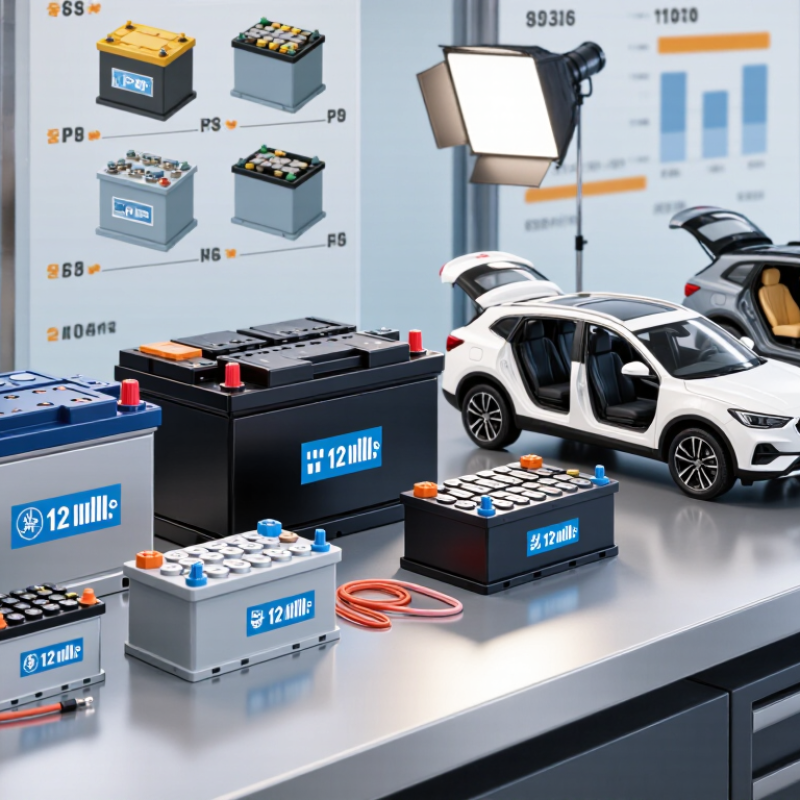
Start with the battery’s job: a 12-volt replacement battery and an electric vehicle’s traction pack have different requirements.
Short version: chemistry matters.
Lithium iron phosphate (LFP) contains no nickel or cobalt and is valued for thermal stability and long cycle life. Nickel-rich chemistries, such as NMC or NCA, generally store more energy per kilogram, which can help when pack space and range matter. That benefit brings tighter demands on heat control and cell management.
The International Energy Agency’s Global EV Outlook 2024 reports that LFP held under 10% of the global electric-car battery market in 2020.
By 2023, its share was about 40%. That shift reflects a practical trade-off, not one chemistry winning every use case.
A tidy comparison can mislead: actual performance also depends on temperature, battery-management systems, and pack design.
For a 12-volt lithium starter battery, check starting-current ratings, built-in protections, case dimensions, and charging-system compatibility.
For an EV, compare usable capacity, cold-weather charging limits, cycle-life data, and thermal safeguards.
Some vehicle manuals specify compatible replacement chemistries, so confirm fitment with a qualified technician.
The label alone is not enough.
Choosing a lithium car battery starts with the vehicle, not the battery’s advertised capacity. Check the owner’s manual for system voltage, minimum cold-cranking amps, and recommended amp-hour capacity. A typical 12-volt vehicle may need a lithium battery designed specifically for engine starting; deep-cycle models are not automatically suitable. The distinction matters.
Compare the battery’s dimensions, terminal layout, and polarity with the existing unit. A battery that fits loosely can move over bumps, while reversed terminals may leave cables too short. Check its battery management system rating and confirm it can handle the starter’s brief, high current demand. Cold-weather performance also deserves attention, since some lithium batteries restrict charging at low temperatures. Details matter.
Then check the vehicle’s charging system. Lithium batteries can have different charging-voltage requirements from lead-acid batteries, and some alternators or battery-monitoring systems may need compatible settings. Do not assume a matching voltage means a compatible replacement. A spec sheet can look reassuring, yet miss a detail such as start-stop operation or an auxiliary battery. I would verify those requirements in the vehicle manual or with a qualified technician before buying. It is easy to focus on amp-hours alone; that is a useful mistake to catch early.
For a lithium car battery, match capacity in amp-hours to the vehicle’s specified range; more capacity alone does not guarantee reliable starting. Check the rated cranking current, not just a headline peak figure, and confirm it meets the vehicle’s cold-start requirement. Cold starts matter. The International Energy Agency’s Global EV Outlook 2024 reported that average lithium-ion pack prices fell 14% in 2023, to $139 per kilowatt-hour. That market figure is useful context, but it does not predict a starter battery’s performance or fit.
Measure the existing battery tray, including height and space for cable bends. A lighter battery can ease handling, yet it still needs a secure hold-down and enough clearance beneath the hood. Check terminal placement and polarity against the vehicle: cables should reach without stretching or crossing, and the terminals must match the connectors. A spec sheet can still mislead. SAE J537, the storage-battery test standard, sets out procedures for evaluating battery performance; use test ratings alongside the vehicle manual, not as a substitute for it. I would double-check the stated capacity, cranking rating, dimensions, weight, and terminal layout before ordering. Small fit details are easy to miss.
Before comparing specifications, identify whether you need a 12-volt starting battery or a high-voltage traction pack. Their charging systems and safety requirements differ. Check the vehicle manual for voltage, chemistry, dimensions, and required battery-management features. Check the label.
For a traction battery, ask for documented safety testing against relevant standards. SAE J2464 covers abuse testing of rechargeable energy-storage systems, but passing tests cannot remove every risk. Lifespan depends on heat, charging habits, and use. The U.S. Department of Energy’s Alternative Fuels Data Center gives 8–15 years as a typical electric-vehicle battery lifespan, with climate and use affecting results. That range is not a promise for every car. For charging, confirm compatibility with the vehicle’s charging system and follow its temperature limits; cold-weather charging protection matters.
Read the warranty’s details, not just its duration. Check the covered capacity threshold, mileage limit, labor costs, and whether coverage transfers to a new owner. A longer warranty can sound reassuring, but exclusions may weaken its value. Ask for the terms in writing. Compare the warranty with your expected annual mileage and ownership period, then keep service and charging records. Small details matter.
Compare the battery’s safety features, lifespan, charging needs, and warranty coverage. Temperature limits are a practical starting point: check that the battery’s specified range matches your climate and driving conditions.
Typical LiFePO₄ temperature ranges: charging from 0°C to 45°C (32°F to 113°F), and discharging from −20°C to 60°C (−4°F to 140°F). These are general reference ranges, not universal specifications. Always follow the battery manufacturer’s limits. Also compare stated cycle life, built-in protection features, and warranty terms before choosing.
Choosing a lithium car battery starts with your actual driving conditions, not just its advertised capacity. Check your vehicle manual for the required voltage, dimensions, terminal layout, and starting-current rating. A battery that fits the tray can still be wrong electrically. Short daily trips, frequent cold starts, and long periods parked place different demands on a battery.
In cold weather, confirm the battery’s cold-cranking rating and whether its battery management system limits charging below freezing. This matters if your car sits outdoors overnight. For stop-and-go commuting, check that the battery and vehicle charging system are compatible; some older alternators were designed for lead-acid batteries. Ask a qualified technician to verify compatibility when the specifications are unclear.
For occasional driving, low self-discharge can help the battery retain charge while the car is parked, but it does not remove the need to inspect connections. Look for clear warranty terms and published performance figures, rather than relying on capacity alone. I would not assume that a higher number means a better fit. One detail is easy to miss: a vehicle with start-stop technology may require a battery with specific support. Check before buying.
| Driving Condition or Vehicle Need | Battery Type to Consider | Key Specifications to Check | Why It May Be Suitable | Important Compatibility Checks |
|---|---|---|---|---|
| Everyday driving in a mild climate | 12.8 V LiFePO4 starting battery | Four-cell, 12.8 V nominal design; capacity and verified cranking rating meeting the vehicle’s requirements | LiFePO4 batteries can offer low weight and strong starting performance when correctly sized and used within their temperature limits. | Match the original battery group size, terminal layout, polarity, hold-down, and vehicle charging-system requirements. |
| Cold-weather starts | Cold-weather-rated LiFePO4 starting battery, or the vehicle manufacturer’s specified battery type | Check the published cranking rating and the test standard used; confirm the minimum discharge temperature and whether the battery has a low-temperature charging cutoff or heater. | Cold reduces available battery power. A suitable cranking rating helps, but lithium batteries can have reduced performance in low temperatures. | Many LiFePO4 batteries must not be charged below 0°C (32°F) unless their design specifically permits it. Verify the battery’s operating and charging limits. |
| Frequent short trips and heavy accessory use | Starting battery specifically designed for automotive charging and accessory loads | Confirm the battery’s usable capacity, continuous discharge limit, reserve capability, and BMS current limits. | Heated seats, lighting, audio equipment, and repeated starts can increase demand. Capacity alone does not establish starting performance. | Check alternator output, accessory current draw, and whether the battery is approved for the vehicle’s charging voltage and charging profile. |
| Start-stop vehicle or vehicle originally fitted with AGM | Only a lithium replacement explicitly approved for that vehicle and charging system | Verify support for the vehicle’s charging strategy, start-stop cycles, battery monitoring system, and required starting performance. | Start-stop systems can cycle the battery frequently and may use charging controls that differ from those in conventional vehicles. | Do not assume a standard lithium starting battery can replace an AGM or EFB battery. Follow the vehicle maker’s specifications and registration or coding requirements. |
| Vehicle with regenerative charging or a smart alternator | Automotive lithium battery approved for variable-voltage charging, if available for the application | Check the permitted charging-voltage range, maximum charge current, BMS behavior, and compatibility with regenerative charging. | Smart charging systems can vary alternator voltage. A battery must be able to work safely with the vehicle’s charging pattern. | Consult the vehicle manufacturer and battery documentation. An incompatible battery may trigger warnings, charge poorly, or be damaged. |
| Seasonal vehicle or long periods between drives | LiFePO4 starting battery with low self-discharge and a suitable storage mode, if specified by its manufacturer | Check storage instructions, recommended state of charge, BMS standby consumption, and approved maintenance-charger settings. | Low self-discharge can be helpful during storage, but connected vehicle electronics may still drain the battery. | Use only a charger compatible with the battery chemistry and BMS. Follow the maker’s storage guidance and avoid leaving the battery in a discharged state. |
| Any replacement purchase | Battery that meets the vehicle’s specified fitment and electrical requirements | Compare dimensions, terminal arrangement, nominal voltage, capacity, verified cranking rating, warranty terms, and safety protections. | A reliable choice is one that fits the application—not simply the battery with the highest advertised capacity or lowest weight. | Confirm the owner’s manual requirements and battery documentation before installation. A 12 V starter battery is not the same as an electric vehicle’s high-voltage traction battery. |
Selection note: Cranking ratings are meaningful only when the test standard is stated, and ratings from different standards may not be directly comparable. Always follow the vehicle manufacturer’s battery specifications and the battery maker’s temperature, charging, and installation instructions.