How to Choose the Best Power Solar Generator for Your Needs?
Choosing the right Power Solar Generator is essential for effective energy management. According to a report by the Solar Energy Industries Association, solar energy capacity in the U.S. increased by 22% in 2020, highlighting a growing trend towards sustainable options. As individuals seek to harness this energy, selecting the ideal generator becomes crucial.
When searching for a Power Solar Generator, consider various factors. Battery capacity, portability, and charging efficiency are key components. A generator with at least 300 watts can power essential devices during an outage. However, not every model suits everyone’s needs. Understanding your power requirements is vital.
Reliability is another element to ponder. Some generators may appear cost-effective but lack longevity. Reviews and ratings can guide your decisions. Yet, one must also remember that the most expensive option is not always the best. Balancing quality and budget is critical. In the expanding solar market, making an informed choice ensures your investment mirrors your energy goals.
Understanding Your Power Needs: Assessing Requirements and Usage
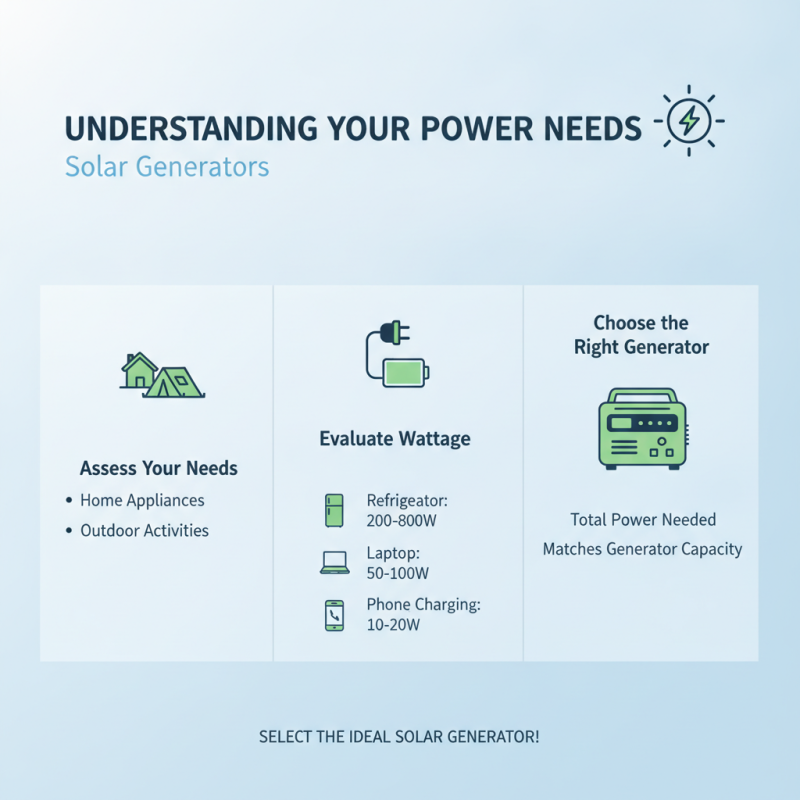
Understanding your power needs is crucial when selecting a solar generator. Every household or outdoor activity demands a different energy supply. Whether powering essential home appliances or charging mobile devices, evaluating wattage requirements is vital. For instance, a standard refrigerator may consume around 200-800 watts, while a laptop typically requires just 50-100 watts. Knowing the total power needed helps in choosing the right generator.
The National Renewable Energy Laboratory (NREL) highlights that the average American home uses about 877 kWh monthly. This translates to roughly 30 kWh daily. Potential users must consider their peak demand hours. For off-grid applications, factors such as sun exposure and usage patterns are pivotal in determining battery capacity and overall efficiency. A survey by the Solar Energy Industries Association shows that a majority of new users focus on portability and ease of use, often overlooking their precise power needs.
In addition, it’s essential to reflect on your patterns of energy use. Some may use high-wattage devices intermittently, while others may require continuous power support. These aspects significantly influence the choice of a power solar generator. Keeping these variables in mind leads to a better decision and may prevent future regrets. Understanding specific energy requirements helps in selecting a system that aligns with your goals.
Types of Solar Generators: Comparing Features and Capabilities
When choosing a solar generator, understanding the types available is crucial.
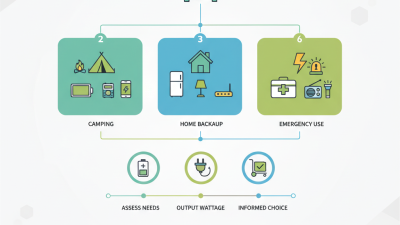
There are portable solar generators and home backup systems.
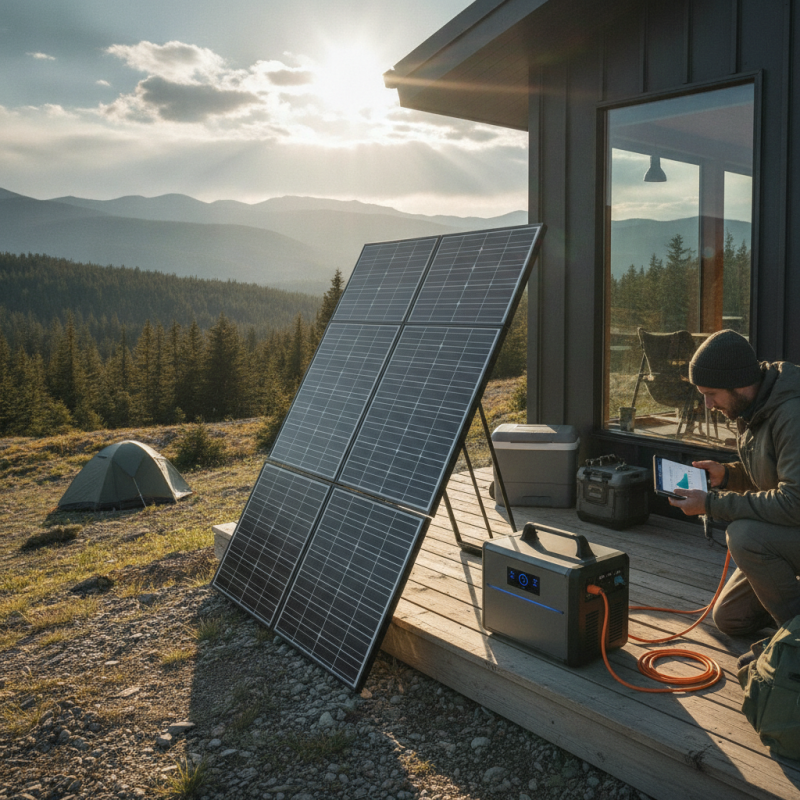
Portable models are lightweight and easy to transport. They offer a practical solution for camping or outdoor activities.
Home backup systems provide larger storage capacities. These systems can power essential appliances during outages.
Different solar generators also vary in features. Some include built-in inverters with various output options.
Others come with multiple USB ports for charging devices. Consider your energy needs before deciding.
Think about the total wattage required.
A generator with a higher capacity may be necessary for larger appliances.
However, it’s essential to weigh the pros and cons.
While heavier systems offer more power, they may be cumbersome. Portability could be sacrificed for higher capacity.
Reflecting on your unique lifestyle and energy use habits will guide your choice.
Don’t rush into a decision. Taking your time can lead to a more satisfying purchase.
Key Specifications to Consider: Capacity, Portability, and Durability
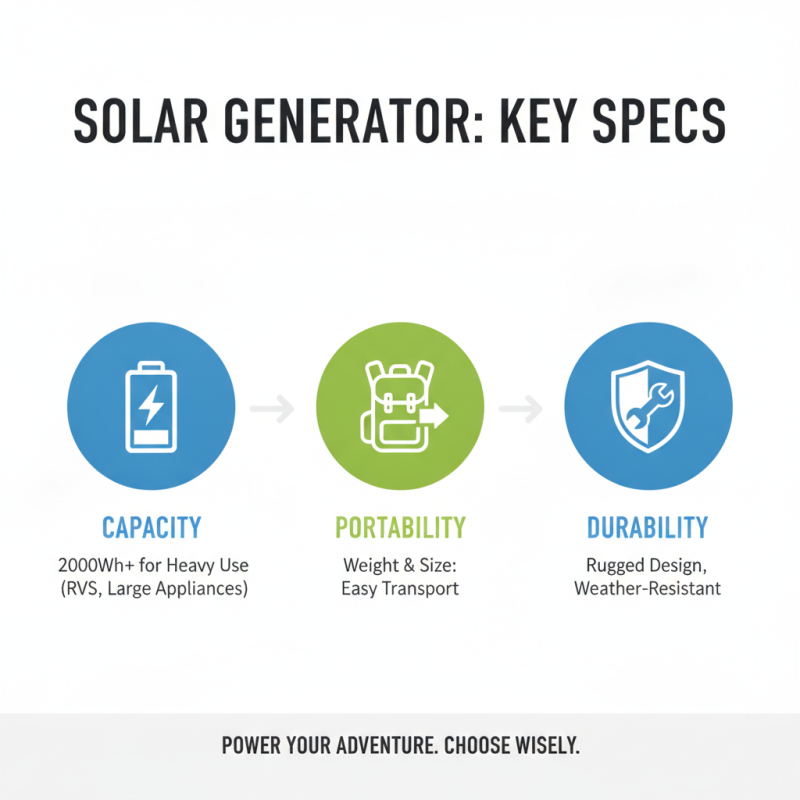
When selecting a solar generator, key specifications can greatly impact its performance. Capacity is a crucial factor. It refers to the power supply a generator can provide at a time. Reports indicate that generators with a capacity of at least 2000Wh are becoming standard for heavy usage, such as for RVs and larger appliances. Ensure that the capacity meets your energy demands. Assess your typical consumption to avoid shortages during critical times.
Portability is equally important. A lightweight generator enhances mobility, making it easier to transport. Many units weigh between 20 to 50 pounds. While lightweight designs are appealing, they often have a trade-off in capacity. Look closely at the balance between weight and power. Finding the right combination can save you future regrets.
Durability should not be overlooked either. A robust generator should be weather-resistant and built to withstand outdoor conditions. Research shows that models with high-quality materials can last years longer than cheaper counterparts. Longevity often reflects reliability in performance. Be cautious of overly cheap options, as they may lead to regrets down the road. The right choice can support your needs effectively for years.
Budgeting for Your Solar Generator: Costs and Value Analysis
When budgeting for a solar generator, costs and value are critical considerations. Start by identifying your energy needs. Calculate the wattage required for your devices. This step helps you estimate the generator size needed for your lifestyle. For example, a camping trip requires different power than a home backup.
Costs can vary significantly. Entry-level models might be affordable, but feature-rich options often offer better durability and efficiency. Look for models that excel in solar charging capabilities. This is crucial for long-term savings. You may spend more upfront, but the investment pays off over time. Don’t overlook the maintenance costs as well. Regular checks ensure efficiency and longevity.
Think about the intended use. If you only need occasional power, consider smaller models. Yet, if you desire a reliable backup for emergencies, investing in a more robust unit is wise. Evaluate warranty options too. A longer warranty often indicates manufacturer confidence. This can reflect the generator's reliability and overall value. Take the time to assess your budget against your needs, ensuring a balanced decision without compromising quality.
Top Brands and Models: Recommendations Based on User Feedback
When choosing a power solar generator, user feedback is vital. Many recommend models based on efficiency, weight, and battery capacity. Experienced users often highlight that portability matters. A lightweight generator is easier to transport for camping or emergency use.
Some models receive praise for their fast charging times. This is critical for users who need energy quickly during power outages. However, some reviews mention issues with durability over time. Buyers should consider long-term performance. Reading extensive user reviews can reveal these concerns.
Another vital aspect is customer service. Many consumers value companies that support their products well. If issues arise, good customer service can make a significant difference. A responsive support team can help resolve problems. Choosing a generator also means evaluating the warranty. A solid warranty indicates manufacturer confidence in quality. User experiences often reflect real-world durability and functionality over time.
Power Solar Generators User Feedback Overview