How to Choose the Best Lithium RV Battery for Your Needs?
Choosing the right Lithium RV Battery is crucial for enhancing your travel experience. A quality battery can power appliances, lights, and devices during your journeys. According to a recent report from the RV Industry Association, over 80% of RV owners prefer lithium battery systems for their lightweight and efficiency. However, selecting the perfect battery isn’t straightforward.
The diversity in capacity, weight, and brand can overwhelm buyers. Many first-time users may struggle to understand the nuances. A good Lithium RV Battery can last up to ten years, but not all models are created equal. You should consider your usage patterns and energy needs carefully.
The cost factor is another consideration. While lithium batteries can be pricier upfront, they can save money in the long run due to their longevity. Reviews highlight inconsistent performance across different brands, leading to frustration for some users. As such, researching and understanding your specific requirements is imperative before making a purchase.

Understanding Lithium RV Batteries: Key Features and Benefits
Lithium RV batteries have gained popularity due to their impressive longevity and efficiency. Unlike traditional lead-acid batteries, lithium models can last up to 10 years or more, making them a reliable choice for RV enthusiasts. A study by the Battery University indicates that lithium batteries can have a cycle life of over 5000 cycles, whereas lead-acid usually lasts only 300-500 cycles. This means less frequent replacements and long-term cost savings.
The benefits extend beyond just lifespan. Lithium batteries charge faster and offer a higher depth of discharge, around 80-90%. In contrast, lead-acid batteries should only be discharged to 50% to avoid damage. This characteristic allows for more usable energy on the road. Still, lithium batteries typically cost more upfront. According to a market analysis, while the initial investment may deter some, the overall value becomes apparent over years of use.
When choosing a lithium battery, assess your power needs carefully. Look for features such as integrated battery management systems (BMS). A BMS ensures safety against overcharging and overheating. Notably, the size and weight of lithium batteries can differ significantly from their lead-acid counterparts. This could impact the overall weight of your RV. Consider both your power requirements and available space before making a decision.
Understanding Lithium RV Batteries: Key Features and Benefits
Assessing Your Power Needs: Size and Capacity Considerations
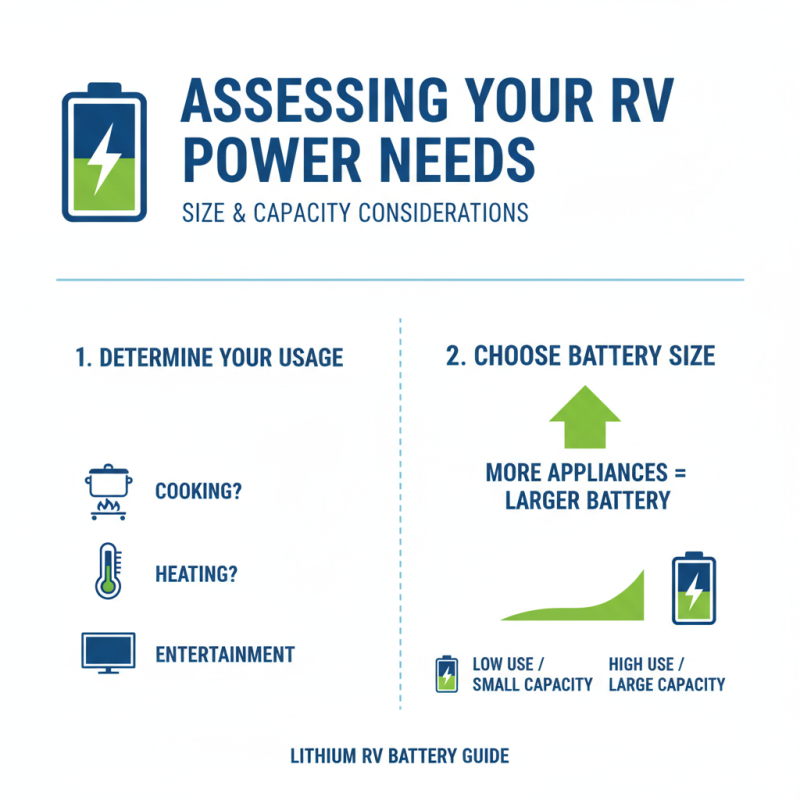
When choosing a lithium RV battery, understanding your power needs is crucial. Start by assessing how you will use your RV. Will you rely on appliances for cooking, heating, or entertainment? The answer to this will help determine the battery size and capacity you need.
Consider wattage when calculating your requirements. List all appliances with their power ratings. For instance, a refrigerator might consume 200 watts, while a microwave can use 1,000 watts. If you plan to run the fridge for 12 hours a day, that’s 2,400 watt-hours. Your battery must provide enough capacity for these common needs.
Don’t forget about the inefficiencies. Lithium batteries have a depth of discharge limit. It is essential to leave some capacity reserve. This aspect can be easy to overlook but is vital for the battery's lifespan. Additionally, think about your charging method. Solar panels or generators can influence how long you can off-grid without depleting your battery. Taking these factors into account will ensure you select a suitable lithium RV battery.
Evaluating Battery Chemistry: Differences Between Lithium Types
When choosing a lithium RV battery, understanding battery chemistry is crucial. Different lithium types vary significantly in performance and features. Lithium iron phosphate (LiFePO4) is popular for RVs due to its stability. This chemistry offers excellent thermal stability, making it safe under varying conditions. However, it typically has a lower energy density compared to other lithium types.
Another option is lithium nickel manganese cobalt oxide (NMC). It combines energy density with thermal stability. This chemistry is less common in RVs but can provide higher capacity for those needing more power. It’s essential to weigh your power needs against safety and efficiency.
Battery lifespan and cycling capabilities also depend on the chemistry chosen. LiFePO4 batteries often last longer, but they may not deliver the same quick power bursts as NMC types. Evaluating your specific needs can be challenging, as you must consider factors like weight, size, and price. Reflecting on these can aid in selecting the right battery, ensuring your RV experience is smooth and enjoyable.
Comparing Price, Warranty, and Lifespan of Lithium Batteries
When selecting a lithium RV battery, price, warranty, and lifespan are critical factors to consider. A recent industry report shows that lithium batteries typically range from $800 to $2,000. However, the initial investment can lead to long-term savings. Many RV owners find that a higher-quality battery often outlasts cheaper alternatives.
The warranty on lithium batteries usually reflects their expected lifespan. Some manufacturers offer warranties of up to 10 years. This is a good indicator of durability. However, it’s essential to read the fine print. A longer warranty may cover only certain defects, not general wear and tear. Always ask about what is included in the warranty.
Lifespans can vary significantly. Most lithium batteries can last between 3,000 to 5,000 cycles. This is a far greater longevity compared to traditional lead-acid batteries, which often last around 500 cycles. Despite these advantages, some users report issues with battery management systems. These systems may not perform well under extreme temperatures, highlighting a need for careful evaluation. The right choice balances price, warranty terms, and the expected lifespan for your specific needs.
Installation and Maintenance Tips for Your Lithium RV Battery
Installing and maintaining a lithium RV battery requires careful consideration. A well-installed battery can enhance your RV's efficiency and lifespan. Lithium batteries generally last longer than traditional lead-acid batteries. They have a cycle life between 2,000 and 5,000 cycles, compared to lead-acid's 500 to 1,500 cycles. Proper installation is crucial; ensure connections are secure to prevent short circuits. Tighten terminals but avoid overtightening to prevent damage.
Regular maintenance is vital for optimal performance. Keep the battery clean and free from corrosion. A study indicates that corrosion can reduce battery life by up to 30%. Monitor the temperature, as lithium batteries perform best between 32°F and 113°F (0°C to 45°C). Using appropriate battery management systems can prevent overcharging and overheating, which are critical for safety.
Be aware of the signs of wear. If your battery fails to hold a charge, it may require replacement. Check connections and ensure no loose wiring is present. Regularly review the manufacturer's maintenance recommendations for additional tips. These practices can help maximize the life and efficiency of your lithium RV battery, supporting your travels for years to come.
How to Choose the Best Lithium RV Battery for Your Needs? - Installation and Maintenance Tips for Your Lithium RV Battery
| Feature |
Description |
Importance |
| Capacity |
Measured in Amp-hours (Ah), this indicates how much energy the battery can store. |
Determines how long your appliances can run on battery power. |
| Weight |
Lithium batteries are lighter than lead-acid options, affecting vehicle weight distribution. |
Affects fuel efficiency and handling. |
| Lifespan |
Typically 10 years or more with proper maintenance. |
Long-term investment; less frequent replacement needed. |
| Charge Time |
Usually faster than traditional batteries, often in a few hours. |
Minimizes downtime; quick recharges between uses. |
| Temperature Tolerance |
Performance can vary with temperature extremes; some are designed for better tolerance. |
Essential for RVs used in varying climates. |
| Safety Features |
Look for built-in protection against overcharging, overheating, and short circuits. |
Critical for ensuring safety while on the road. |