As renewable electricity expands, storage must do more than react quickly. It must also discharge for four, eight, or twelve hours. The Vanadium Redox Flow Battery is designed for this longer-duration role. Its liquid electrolyte stays in external tanks, while power and energy can be scaled separately. That distinction matters when solar output falls after sunset.
The International Energy Agency’s Batteries and Secure Energy Transitions report identifies grid-scale storage as essential for integrating growing renewable capacity. The U.S. Department of Energy’s Long Duration Storage Shot also targets a 90% cost reduction by 2030. Meanwhile, Lazard’s Levelized Cost of Storage analysis shows that economics vary sharply with duration, financing, cycling, and project location. No single technology wins everywhere.
Professor Maria Skyllas-Kazacos, a leading vanadium battery researcher, described the technology as “particularly suited to large-scale energy storage.” Her assessment remains influential, but it should not end the discussion. Vanadium prices, electrolyte availability, system footprint, and limited manufacturing scale still affect project returns. The market is promising, not effortless.
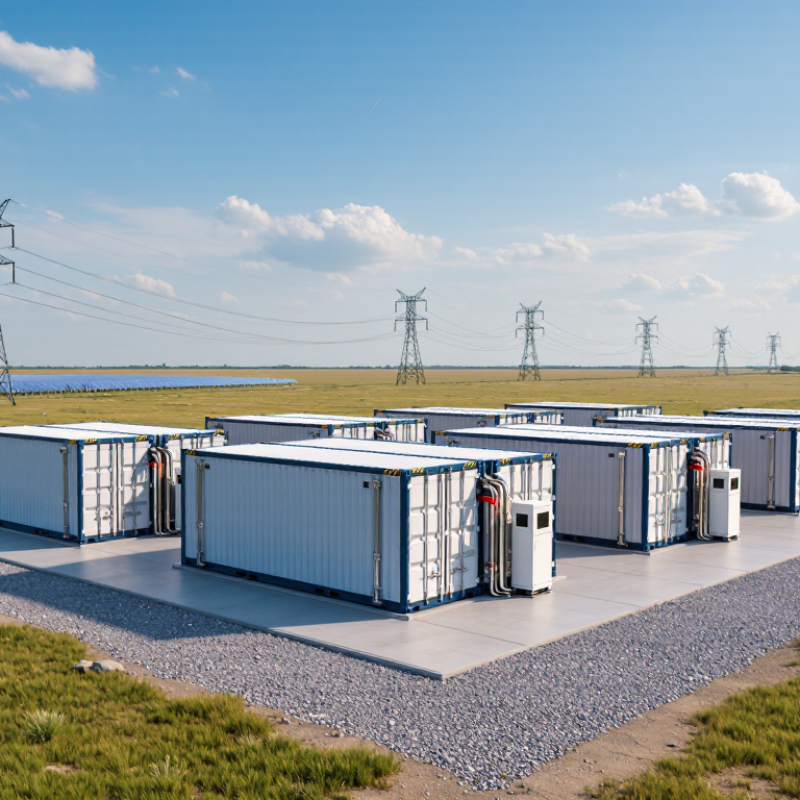
This Top 10 Vanadium Redox Flow Battery Manufacturers guide examines companies through practical criteria. These include commercial deployments, electrolyte strategy, stack design, manufacturing capacity, safety records, warranties, and service capability. Company announcements can sound impressive beside a containerized system in a sunny field. Yet operating data often tells a different story.
Some manufacturers focus on utility projects. Others target microgrids, renewable integration, or industrial facilities. Their technologies may look similar, but their execution risks differ. This comparison uses public industry reports, technical disclosures, and demonstrated experience. It also recognizes an uncomfortable truth: the strongest supplier today may not remain strongest tomorrow.
A vanadium redox flow battery stores electricity in liquid electrolyte, not solid battery cells. Two tanks hold vanadium solutions in different oxidation states. Pumps move these liquids through an electrochemical stack, where ions exchange across a membrane. During charging, electricity changes the vanadium ions. During discharge, the reverse reaction produces power.
Its main advantage is separating energy capacity from power capacity. Larger tanks provide longer storage, while a larger stack increases output. This design suits renewable projects that need four to twelve hours of discharge. The U.S. Department of Energy’s Energy Storage Grand Challenge Roadmap identifies flow batteries as promising for long-duration storage. Industry assessments commonly report round-trip efficiency near 70% to 85%, with service lives exceeding 10,000 cycles under controlled conditions.
The electrolyte can be reused for many years. That reduces some replacement concerns. It also avoids the thermal runaway risks associated with certain energy-dense chemistries. However, pumps, membranes, plumbing, and temperature control still require maintenance. Lazard’s Levelized Cost of Storage reports show that flow battery economics remain highly sensitive to project duration and financing. Real installations may perform below laboratory figures. This is easy to overlook. A cool, well-managed site is not the same as a dusty field installation with frequent cycling. Vanadium price volatility can also affect upfront costs, so buyers should examine electrolyte ownership, warranty limits, efficiency at partial load, and measured degradation data before comparing technologies.
Evaluating vanadium redox flow battery manufacturers requires more than comparing container prices. IRENA reports typical round-trip efficiency of about 65% to 85% for vanadium flow systems. That range matters when electricity prices change hourly. Buyers should request independently tested efficiency curves, not only laboratory peak figures. They should also examine stack degradation, electrolyte purity, membrane performance, and pump energy use. Small losses become expensive across thousands of cycles.
Manufacturing Evidence A credible supplier can document factory quality controls, batch traceability, field failure rates, and response times for replacement parts. Project references should include operating hours, ambient temperatures, availability, and actual cycling patterns.
Lifetime Cost The U.S. Department of Energy’s Long Duration Storage Shot targets a 90% cost reduction for systems delivering ten hours or more. This target makes lifetime cost more useful than the initial purchase price. Levelized cost estimates should include land, power conversion equipment, augmentation, maintenance, and financing.
Safety & Chemistry Safety and chemistry deserve close inspection. Nonflammable aqueous electrolyte can reduce fire exposure, but it does not remove every operational risk. Buyers still need protection against leaks, corrosion, electrical faults, and poor ventilation. Independent testing against recognized electrical and industrial standards strengthens confidence. Recycling plans also matter because vanadium electrolyte can retain recovery value.
A low bid may hide weak service coverage or optimistic degradation assumptions. I would challenge every unusually favorable number. Some published results are too clean. Real sites are messier, and that judgment may need revision as longer operating data becomes available.
Choosing the top 10 vanadium redox flow battery manufacturers requires more than checking installed capacity. A reliable review should examine stack design, electrolyte quality, membrane durability, and service experience. Manufacturers with proven projects deserve attention, especially those operating systems through seasonal temperature changes and repeated daily cycling. Verified field data matters. Marketing claims alone do not.
The strongest suppliers usually provide complete systems, including tanks, pumps, controls, monitoring software, and safety procedures. Their batteries should support long-duration storage, flexible discharge rates, and predictable maintenance. Independent testing, warranty terms, response times, and replacement-part availability also reveal practical strength. A ranking can still mislead when companies report projects differently. That weakness deserves honest attention.
Tips: Ask for measured round-trip efficiency, not estimates. Request operating records from comparable installations. Check electrolyte service plans and emergency procedures. Confirm local technical support before signing. Visit a working site if possible. Small details matter. A clear contract should define degradation, availability, and performance testing.
The top ten vanadium redox flow battery manufacturers differ mainly in stack design, electrolyte quality, and project execution. Most use all-vanadium chemistry, which reduces cross-contamination during repeated charge cycles. Their systems usually separate power and energy ratings, allowing storage duration to expand with larger electrolyte tanks.
Technology comparisons should examine membrane durability, pump efficiency, temperature control, and battery management software. Some suppliers focus on compact stacks for commercial buildings. Others engineer containerized systems exceeding 100 megawatt-hours. Field experience matters. A well-designed laboratory unit may perform differently under dusty sites, winter temperatures, or frequent daily cycling. This is where public test data becomes valuable, although many published figures remain difficult to compare.
Project portfolios reveal each manufacturer’s market presence more clearly. Installations supporting renewable integration, industrial backup, and utility peak shaving demonstrate practical capability. Developers should check commissioning dates, operating hours, warranty coverage, and local service teams. Regional strength also varies: some manufacturers have deeper supply chains in Asia, while others rely on partnerships across Europe, North America, or Australia. Electrolyte leasing models can lower initial costs, but their long-term pricing deserves careful review. I would not rank suppliers by announced capacity alone. Delayed projects, limited replacement records, and unclear degradation data can change the picture. The strongest comparison combines audited performance, operating references, financing stability, and transparent maintenance requirements.
A top-ten list is only a starting point when selecting a vanadium redox flow battery manufacturer. The strongest supplier is not always the most visible one. Examine operating history, engineering depth, and documented project results. Ask for measured performance, not only brochure figures. Round-trip efficiency, response time, and capacity retention should be tested under comparable conditions.
Inspect the complete system. Review stack design, electrolyte concentration, pumps, sensors, and control software. Check whether the manufacturer provides factory acceptance testing and clear maintenance procedures. A practical detail matters: who replaces a failed pump at 2 a.m.? Confirm local service coverage, spare-part storage, and technician training. Warranty terms should define energy capacity, availability, response time, and degradation limits.
Request references from projects with similar climate, duty cycle, and grid conditions. A battery operating in a cool warehouse may perform differently in a hot, dusty site. Study safety documentation, recycling plans, insurance requirements, and financial stability. Independent certification adds confidence, but it does not replace site-specific validation. Some published efficiency figures use ideal laboratory settings. That is easy to miss. Allow time for an on-site pilot, even when the sales proposal looks convincing. Mistakes usually appear in integration details, not in the headline capacity.
| Rank | Manufacturer | Primary Market Region | Commercial Position | Typical Application Focus | Typical Project Scale | Electrolyte Capability | Delivery and Service Capability | Important Selection Signal |
|---|---|---|---|---|---|---|---|---|
| 1 | Manufacturer 01 | China and Asia-Pacific | Commercial and utility-scale | Grid-scale renewable integration, peak shaving, and frequency regulation | Multi-megawatt to hundreds of megawatt-hours | System supply with separately managed vanadium electrolyte | Engineering, procurement, construction support, commissioning, and long-term service | Strongest fit where large reference projects and high-volume manufacturing are required |
| 2 | Manufacturer 02 | Europe and North America | Commercial and expanding | Renewable energy firming, microgrids, and industrial storage | Hundreds of kilowatts to tens of megawatts | Integrated electrolyte and battery-system options | Modular deployment, remote monitoring, commissioning, and lifecycle support | Suitable for customers prioritizing modularity, safety, and long-duration discharge |
| 3 | Manufacturer 03 | China and North America | Commercial and project-oriented | Utility storage, renewable integration, and transmission support | Megawatt-scale systems and large energy-storage projects | Vanadium electrolyte sourcing and system integration | Project design, system integration, technical support, and operation assistance | Evaluate project execution history, electrolyte security, and local service coverage |
| 4 | Manufacturer 04 | Japan and Asia-Pacific | Established commercial supplier | Utility demonstration, renewable integration, and industrial power quality | Hundreds of kilowatts to multi-megawatt installations | System-level electrolyte and stack integration | Detailed engineering, grid integration, controls, commissioning, and maintenance | A strong candidate when bankability, engineering quality, and grid compliance matter |
| 5 | Manufacturer 05 | Europe | Commercial specialist | Commercial and industrial storage, renewable self-consumption, and microgrids | Tens of kilowatts to several megawatts | Electrolyte supply available through project partners or integrated packages | Containerized systems, installation support, monitoring, and technical service | Compare total installed cost, local installers, and replacement-part availability |
| 6 | Manufacturer 06 | South Korea and Asia-Pacific | Commercial and technology-led | Renewable firming, commercial facilities, and distributed energy storage | Hundreds of kilowatts to multi-megawatt systems | Integrated stack and electrolyte-system supply | Application engineering, controls integration, commissioning, and after-sales support | Confirm local regulatory approvals, performance guarantees, and service response times |
| 7 | Manufacturer 07 | Europe and the United States | Commercial development and deployment | Utility-scale renewable storage and long-duration energy shifting | Megawatt-scale projects with multi-hour duration | Electrolyte sourcing and full-system integration options | Project development, system engineering, financing support, and lifecycle service | Best assessed through financing strength, delivery schedule, and contracted performance terms |
| 8 | Manufacturer 08 | China and Southeast Asia | Commercial manufacturer | Industrial parks, renewable generation, and utility peak shifting | Hundreds of kilowatts to tens of megawatts | Integrated electrolyte management and system supply | Factory testing, installation support, remote diagnostics, and maintenance packages | Check independent performance data, warranty scope, and export project experience |
| 9 | Manufacturer 09 | Australia and Asia-Pacific | Commercial niche supplier | Remote grids, mining operations, renewable microgrids, and backup power | Tens of kilowatts to several megawatts | Electrolyte supplied as part of selected system configurations | Remote-site engineering, containerized delivery, commissioning, and field support | Prioritize operating-temperature range, logistics, and on-site maintenance capability |
| 10 | Manufacturer 10 | Europe and the Middle East | Emerging commercial supplier | Commercial buildings, renewable hybrid systems, and resilient power supply | Tens of kilowatts to low-megawatt installations | System integration with third-party electrolyte sourcing | Application design, installation coordination, monitoring, and maintenance support | Validate reference-site operating data, supplier continuity, and warranty conditions |
Selection factors should include round-trip efficiency, usable energy duration, electrolyte availability, stack replacement cost, safety design, warranty terms, bankability, grid-code compliance, commissioning support, and local after-sales service.