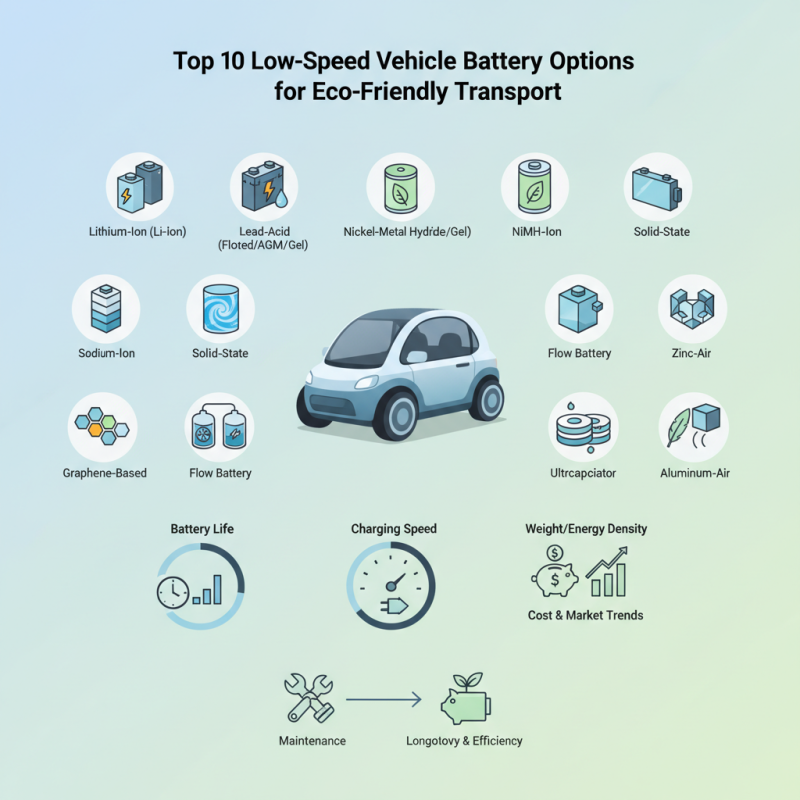
Top 10 Low-Speed Vehicle Battery Options for Eco-Friendly Transport?
The demand for eco-friendly transport has fueled interest in Low-Speed Vehicle Battery options. These vehicles, often used in urban and recreational settings, require reliable power sources. The right battery can enhance their performance and sustainability.
Choosing the best battery isn't straightforward. Factors like battery life, charging speed, and weight all matter. Some options may lack energy density, impacting distance traveled on a single charge. Pricing also presents challenges; high-quality batteries tend to come at a premium.
Many consumers overlook the importance of battery maintenance. Proper care can extend battery lifespan and improve efficiency. As electric vehicles gain popularity, understanding Battery specifications is crucial for making smart choices in a growing market. Emphasizing these aspects can help consumers make informed decisions as they embark on their eco-friendly transport journey.
Understanding Low-Speed Vehicles and Their Battery Requirements
Low-speed vehicles (LSVs) have gained popularity in eco-friendly transport. These vehicles, often used for short trips, require specific batteries to function efficiently. According to a report from the International Council on Clean Transportation (ICCT), LSVs can reduce greenhouse gas emissions significantly, making them an attractive option for urban environments.
Batteries for LSVs must offer longevity and reliability. Lithium-ion batteries are among the best choices due to their energy density and lifespan. However, they can be costly. Some users find alternatives like lead-acid batteries less expensive, although they offer a shorter lifespan and lower energy efficiency. In fact, the Department of Energy suggests that lead-acid batteries can have a cycle life of 300-500 cycles, while lithium-ion can last up to 2,000 cycles.
An analysis indicates that the growing market for LSVs may lead to battery recycling demands. This presents both a challenge and an opportunity. Current recycling processes for lithium-ion batteries are not yet efficient. Improving these processes is essential for sustainability. As the LSV market expands, addressing battery disposal will be critical for environmental impact. This requires evolving technology and infrastructure.
Key Features of Batteries Suitable for Eco-Friendly Transport
When considering batteries for eco-friendly transport, several key features stand out. The first is energy density. A battery with high energy density can store more power in a compact space. This is crucial for keeping the vehicle lightweight and efficient. Another important feature is cycle life. Batteries that endure more charge and discharge cycles last longer. Longevity means less frequent replacements and less waste.
Moreover, environmental impact is vital. Sustainable materials in battery production can reduce the carbon footprint. Batteries that are easily recyclable also contribute positively. Additionally, fast charging capability enhances convenience. Users prefer batteries that can charge quickly during short breaks. Safety features shouldn't be overlooked either. Ensuring thermal stability and protection against overcharging can prevent hazardous incidents.
However, the trade-offs can't be ignored. High energy density often comes at a higher cost. Some batteries might not offer the best performance in extreme weather conditions. The search for the perfect battery solution is ongoing, but awareness of these features can lead to better choices in eco-friendly transportation. It's essential to strike a balance between performance, sustainability, and safety.
Top Battery Types for Low-Speed Electric Vehicles
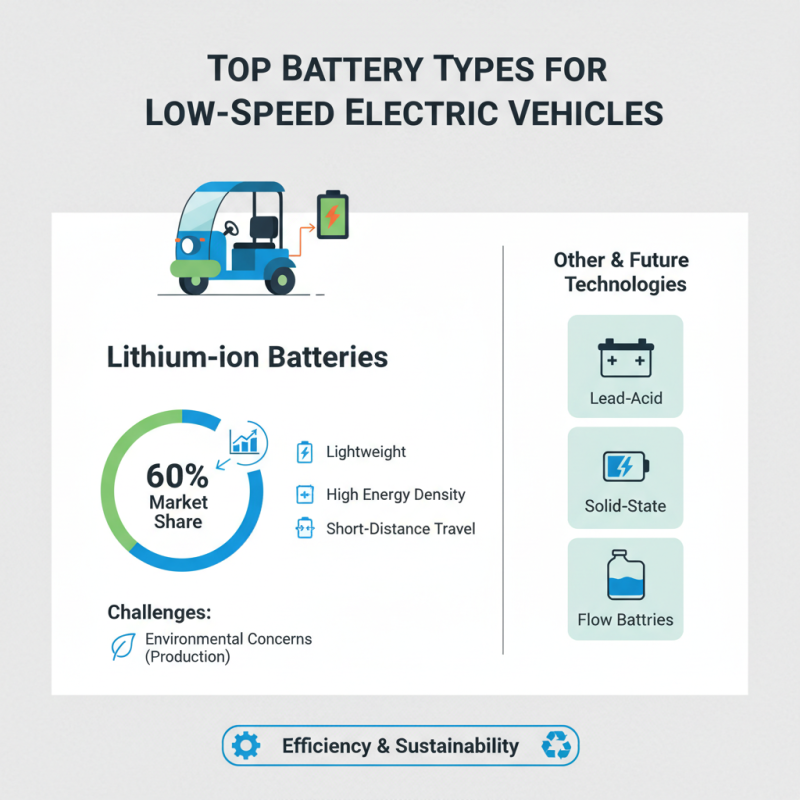
Electric vehicles (EVs) are evolving, especially in low-speed applications. The battery choices for these vehicles significantly impact efficiency and sustainability. Lithium-ion batteries dominate the market, boasting a 60% market share according to recent industry reports. Their lightweight and high energy density make them ideal for short-distance travel. However, their production has environmental concerns, requiring reflection on sustainability practices.
Lead-acid batteries are often cheaper and widely used in low-speed vehicles. They provide reliable performance, particularly in urban settings. However, they have a shorter lifespan and lower efficiency compared to newer technologies. Industry data shows these batteries typically last three to five years, needing more frequent replacements.
Emerging battery technologies like sodium-ion are being explored. These alternatives aim to reduce reliance on lithium. Early reports suggest sodium-ion batteries could offer a similar performance but at a lower environmental cost. Nonetheless, they remain in the development phase, needing more validation in real-world scenarios. The landscape is changing rapidly, yet challenges persist in balancing performance, cost, and environmental impact.
Comparative Analysis of Battery Performance Metrics
Low-speed vehicles are an eco-friendly alternative for urban transport. However, battery performance plays a crucial role. Choosing the right battery can enhance efficiency and sustainability. Various metrics matter when evaluating options. These include energy density, lifespan, and recharge time.
Energy density determines how much power a battery can store. A higher density means a longer drive range. Lifespan is equally important. Some batteries may last for years, while others degrade quickly. Additionally, recharge time can affect usability. A long wait time may hinder daily use.
Not all options perform equally well. Some batteries excel in energy density but might have shorter lifespans. Others may take too long to recharge. This inconsistency raises questions about selecting the best fit. It's essential to consider specific needs for urban mobility. Each choice carries its trade-offs, prompting reflection on your priorities in eco-friendly transport.
Top 10 Low-Speed Vehicle Battery Options for Eco-Friendly Transport
| Battery Type |
Capacity (Ah) |
Voltage (V) |
Energy (Wh) |
Cycle Life |
Weight (kg) |
Cost ($) |
| Lead Acid |
120 |
12 |
1440 |
500 |
35 |
150 |
| Lithium-Ion |
100 |
12.8 |
1280 |
2000 |
25 |
400 |
| Nickel-Metal Hydride |
80 |
7.2 |
576 |
1200 |
30 |
250 |
| Gel Cell |
110 |
12 |
1320 |
600 |
40 |
200 |
| Lithium Iron Phosphate |
90 |
12.8 |
1152 |
3000 |
22 |
450 |
| Lead Carbon |
100 |
12 |
1200 |
1200 |
36 |
180 |
| Absorbent Glass Mat |
75 |
12 |
900 |
900 |
28 |
200 |
| Nickel Cadmium |
60 |
12 |
720 |
2000 |
30 |
300 |
| Sulfuric Acid |
85 |
12 |
1020 |
450 |
38 |
180 |
| Sodium-Ion |
70 |
12 |
840 |
500 |
32 |
220 |
Emerging Technologies in Eco-Friendly Vehicle Batteries
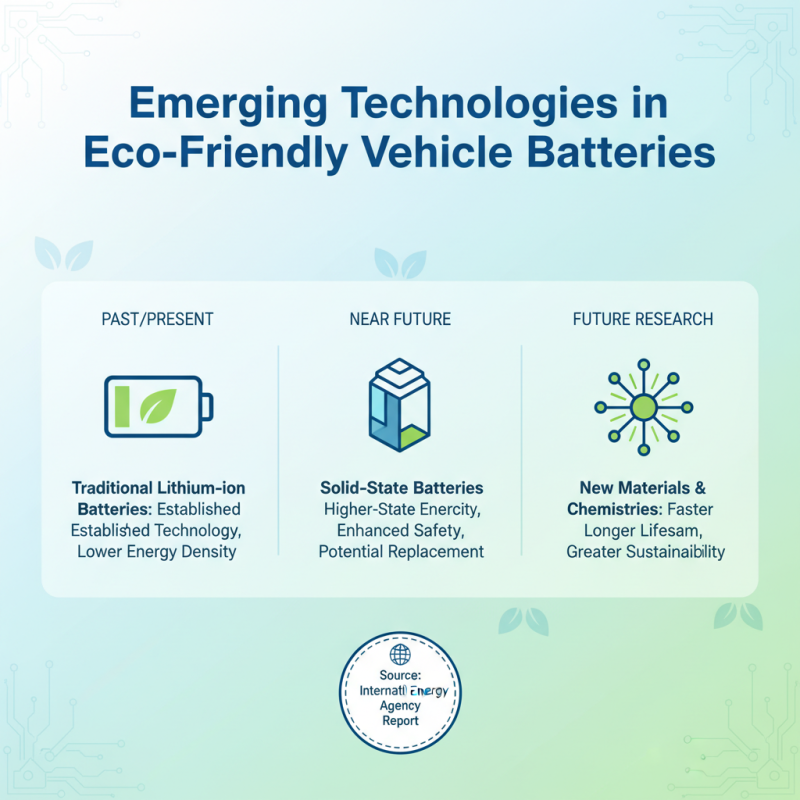
The evolution of eco-friendly vehicle batteries is rapid. New materials and technologies are emerging. A recent report from the International Energy Agency highlights significant advancements. Solid-state batteries, for instance, promise higher energy densities and improved safety. They could replace traditional lithium-ion batteries in the near future.
Research shows that solid-state batteries can potentially increase range by 40%. They also reduce the risk of fires. However, development challenges remain. Manufacturers face issues in scaling production. Costs are currently high, making widespread adoption difficult. The transition to these batteries requires careful planning.
In parallel, researchers are exploring lithium-sulfur batteries. These batteries may offer a lower environmental impact than conventional options. They can deliver up to five times the energy density of current batteries. Still, scalability and lifespan are concerns. The balance between cost-effectiveness and sustainability needs attention as the market evolves.