What Is a Power Storage Battery and How Does It Work?
A Power Storage Battery is more than a large box connected to solar panels or the grid. It stores electricity during low-demand periods and releases it when homes, factories, or networks need power. Inside, electrochemical cells convert electrical energy into chemical energy. During discharge, that process reverses. A battery management system monitors voltage, temperature, and state of charge. An inverter then converts direct current into usable alternating current.
The International Energy Agency reported that battery storage was the fastest-growing commercially available energy technology in 2023, with deployment more than doubling year on year. Its Batteries and Secure Energy Transitions report also identifies batteries as essential for integrating more renewable electricity. IEA Executive Director Fatih Birol stated, “Batteries are a critical technology for clean energy transitions.” That statement reflects the sector’s direction, not a guarantee of perfect performance.
Real systems still face heat, capacity loss, installation costs, and supply-chain pressure. Nothing is effortless. Lithium-ion batteries dominate current projects because they offer high efficiency and proven manufacturing scale. However, flow batteries, sodium-ion systems, and other chemistries may suit longer-duration storage. A useful evaluation must examine round-trip efficiency, cycle life, safety controls, operating temperature, and recycling plans. BloombergNEF’s Energy Storage System Cost Survey shows that system costs continue changing as technology and manufacturing scale improve. Figures can age quickly. That matters when comparing products. This guide explains how a Power Storage Battery works, where it creates measurable value, and why technical specifications deserve closer questioning.
Definition and Core Types of Power Storage Batteries
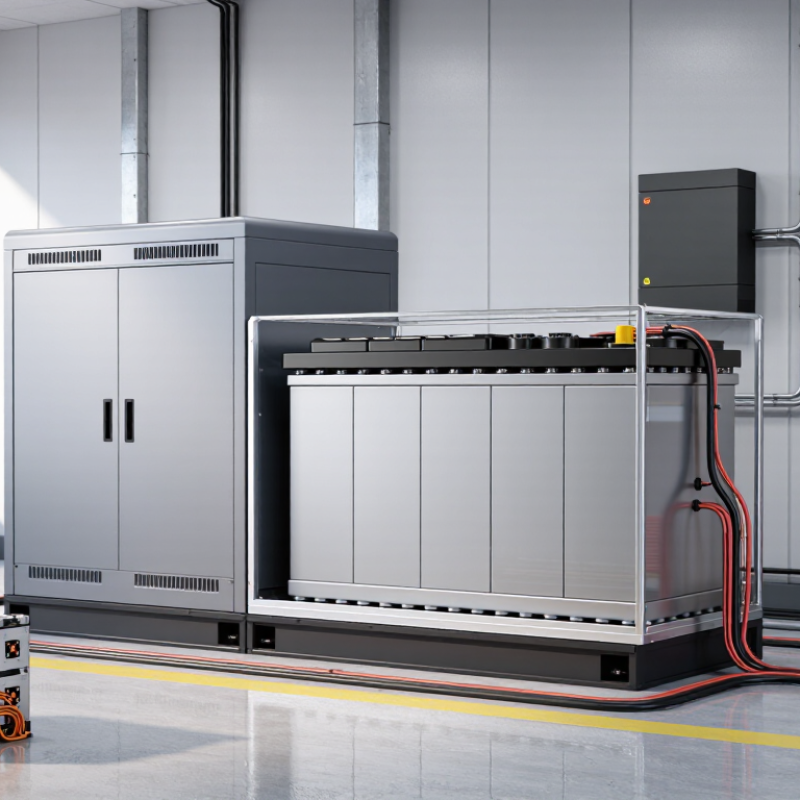
A power storage battery stores electrical energy and releases it when equipment needs power. Inside, chemical reactions move ions between two electrodes through an electrolyte. During charging, electricity drives this reaction in reverse. During discharge, electrons travel through an external circuit and produce usable current. Most home and commercial systems also use an inverter, which converts battery output into the form that appliances require.
Lithium-ion batteries are common because they offer high energy density, fast response, and relatively strong cycle performance. They need careful temperature control and a battery management system. Lead-acid batteries are heavier and usually have shorter service lives, but they remain practical for backup applications with modest budgets. They also need suitable ventilation in some installations. Flow batteries store energy in liquid electrolytes held in separate tanks. Their capacity can scale by enlarging the tanks, making them attractive for long-duration stationary storage. Sodium-ion batteries are developing quickly and may reduce dependence on certain raw materials. Their energy density is currently lower in many designs.
No type is universally best. A neat comparison can mislead. Real selection depends on daily cycling, discharge duration, space, temperature, maintenance, and safety controls. In a field installation, a technician may notice voltage loss, heat around terminals, or uneven charging before software reports a fault. That practical evidence matters. Battery performance also changes with age, and published capacity often reflects controlled test conditions rather than a busy household or industrial site.
What Is a Power Storage Battery and How Does It Work?
A power storage battery stores electrical energy in chemical form and releases it when needed. During charging, electrical energy drives reversible chemical reactions; during discharge, those reactions produce an electric current. The chart compares representative round-trip efficiency values for major battery storage technologies.
Round-trip efficiency is the percentage of electricity recovered after a complete charge-and-discharge cycle. Actual performance varies with battery design, operating temperature, charge rate, age, and system controls.
Indicative values based on commonly reported technical ranges from public energy-storage research and government energy-storage references.
How Battery Cells Convert Chemical Energy into Electricity
What Is a Power Storage Battery and How Does It Work?
A power storage battery holds energy in chemical form. Each cell contains two electrodes, an electrolyte, and a separator. During discharge, chemical reactions at the negative electrode release electrons. These electrons travel through an external circuit and power a lamp, inverter, or motor. Meanwhile, charged ions move through the electrolyte toward the positive electrode. The separator prevents direct contact between electrodes. That small barrier is essential.
During charging, an external power source reverses this movement. Electrons are pushed back through the circuit, while ions return through the electrolyte. The battery then stores chemical potential again. A battery management system monitors voltage, temperature, and current. It also limits unsafe operating conditions. The process sounds simple. It is not perfectly tidy.
Battery performance depends on temperature, charging speed, materials, and age. Repeated cycling slowly changes electrode surfaces and reduces usable capacity. The International Energy Agency reported that electric vehicle battery demand exceeded 750 GWh in 2023, showing the scale of modern cell production. Its Batteries and Secure Energy Transitions report also identifies stationary storage as a rapidly expanding demand source. The U.S. Department of Energy’s Energy Storage Grand Challenge Roadmap treats round-trip efficiency, safety, lifetime, and cost as connected measures. One number cannot describe a battery well. Real systems lose energy as heat during conversion, and field results may differ from laboratory ratings. That gap deserves attention.
Key Performance Metrics: 85–95% Efficiency and 150–250 Wh/kg
A power storage battery stores electricity chemically and releases it when demand rises. During charging, ions move through the electrolyte while electrons travel through an external circuit. During discharge, that movement reverses. Simple in principle. Careful measurement matters.
In practical systems, efficiency usually ranges from 85% to 95%. This is commonly expressed as round-trip efficiency.
If 10 kWh enters the battery, only 8.5 to 9.5 kWh returns. The remainder becomes heat, conversion loss, or standby consumption.
Energy density explains the second key metric: 150–250 Wh/kg. A 200 Wh/kg battery theoretically stores 20 kWh in 100 kilograms of cells. The complete cabinet weighs more. Housing, cooling, wiring, and safety controls add mass. That distinction is easy to miss.
Field performance also changes with temperature, charge rate, and age. At freezing temperatures, resistance rises and available capacity can fall. High temperatures may improve short-term output but accelerate degradation. Engineers therefore test batteries at several loads, not one convenient setting.
For a household or small facility, usable energy matters more than a brochure number. A technician should record input energy, output energy, ambient temperature, and idle consumption. Practical estimates can look excellent until standby losses are included. That is an important correction.
Ratings are not promises. They depend on installation and operating habits. A battery kept near its recommended charge range may deliver steadier results.
Yet even careful systems age, and real data can disagree with laboratory figures. Reviewing monthly measurements keeps expectations honest.
Battery Management Systems, Safety Controls, and Thermal Regulation
A power storage battery stores electrical energy in electrochemical cells for later use. Its cells work together, but they do not always age evenly. A battery management system, or BMS, monitors voltage, current, temperature, and charge levels. It compares readings across individual cells. This data helps prevent overcharging, deep discharge, and unsafe operating conditions. Small errors matter.
The BMS can limit charging or reduce output when readings exceed safe limits. It may disconnect the battery during a serious fault. Fuses, contactors, insulation monitoring, and emergency shutdown circuits add separate layers of protection. Good engineering uses several safeguards, not one software setting. No control system is perfect. A sensor can drift, loosen, or report a false reading. Regular inspection and calibrated testing remain necessary.
Thermal regulation keeps battery cells within their approved temperature range. During charging and heavy loads, cells produce heat. Air cooling may use fans and channels, while liquid systems transfer heat through plates or pipes. Temperature sensors must detect hot spots, not only average temperature. The BMS can lower power when heat rises too quickly. Uneven temperatures may signal blocked airflow, damaged insulation, or aging cells. In practical installations, maintenance teams should review temperature logs and physical conditions together. That lesson is easy to miss.
Grid Applications, 1–4-Hour Duration, and 10–15-Year Service Life
A power storage battery stores electricity chemically and releases it when the grid needs support. Inside each module, cells exchange ions during charging and discharging. Power conversion equipment changes direct current into grid-compatible alternating current. Controllers then manage voltage, frequency, temperature, and charging limits.
Grid batteries often provide one to four hours of rated power. A 100-megawatt system with four-hour duration can deliver 400 megawatt-hours before recharging. These systems shift daytime solar power into evening demand. They also respond within seconds to frequency changes or sudden generation losses. In operating projects, this fast response can reduce stress on transmission equipment. It is not a simple oversized backup battery. It is a managed grid asset.
A service life of 10 to 15 years is realistic under suitable operating conditions. However, capacity gradually fades with heat, deep cycling, and long periods at high charge. Four hours sounds precise. It is not always fixed. A battery may deliver less energy after years of use, even when its controls remain functional. Engineers track temperature, cycle count, state of charge, and available capacity through monitoring systems. They may limit daily cycling or replace selected modules to protect long-term performance. This part deserves more honesty: published life estimates often assume controlled conditions, while real grids can be harsher.