How to Choose the Best Energy Storage Battery for Your Needs?
Choosing the right Energy Storage Battery can be a daunting task. With numerous options available, it’s essential to consider your specific needs. Dr. Emily Carter, an expert in energy solutions, once stated, "Selecting an energy storage system is about finding the perfect fit for your lifestyle." Understanding the types of batteries can lead to better choices.
Many factors influence battery selection, including capacity, lifespan, and cost. For instance, lithium-ion batteries are known for efficiency, but they may not suit every budget. Some individuals might prioritize lower costs over performance. This can lead to regrets later on. Practical evaluation of your energy needs is crucial.
Furthermore, installation and maintenance are vital aspects often overlooked. A complex setup might discourage use, making the investment less effective. Professionals can help, but it might add to the overall expense. Evaluating these elements ensures that your chosen Energy Storage Battery aligns well with your energy goals. Remember, the right choice may require more than just research; it might involve trial and error.
Understanding Different Types of Energy Storage Batteries
When selecting an energy storage battery, it's crucial to understand the different types available.
Lithium-ion batteries are popular for their high energy density and long lifespan. They suit a variety of applications, from home energy systems to electric vehicles.
Lead-acid batteries, on the other hand, are heavier and less efficient but are often less expensive. They work well for backup systems, particularly in off-grid settings.
Tips: Consider your energy needs first. Do you want storage for solar power or to back up existing systems? This will influence your choice.
Check the battery cycle life. A longer cycle life means the battery will last longer in the long run.
Another option is flow batteries. These provide scalability and can discharge energy for longer periods.
However, they are complex and might need more maintenance. Think carefully about your space and how often you might need a recharge.
Tips: Always assess your budget before making a choice. The upfront cost can be deceiving. Factor in future savings on energy bills too.
Remember, the right battery should complement your lifestyle and energy demands. If you're uncertain, you might regret your decision later.
Evaluating Energy Needs and Application Scenarios
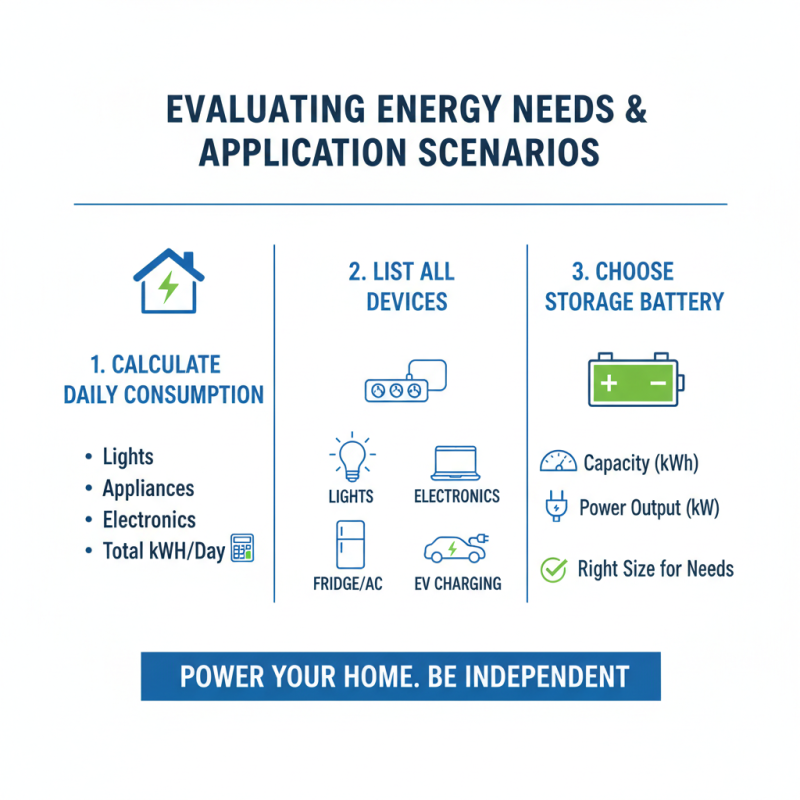
Evaluating your energy needs is crucial when choosing a storage battery. Start by calculating your daily energy consumption. Consider all devices you need to power. This includes lights, appliances, and any electronics.
Next, think about your application scenarios. Are you preparing for grid outages or seeking off-grid solutions? Different situations require different battery capacities. For instance, if you live in a place with frequent blackouts, a larger battery might be necessary. Alternatively, for a small cabin, a smaller unit could suffice.
Don’t forget to assess how often you’ll recharge the battery. Short charging cycles can be a headache. Batteries vary in charging speed and efficiency. Think about your lifestyle and usage patterns. This reflection can lead to better choices. Sometimes, the best option isn’t the most expensive one. Understanding your specific needs can often lead to surprising insights.
Key Factors to Consider When Choosing a Battery
When choosing an energy storage battery, several key factors come into play. Capacity is crucial. It determines how much energy the battery can store. Reports indicate that residential batteries usually range from 5 kWh to 15 kWh. This range affects how long you can power your home during outages. Insufficient capacity can lead to unexpected blackouts.
Another important factor is discharge rate. This illustrates how quickly a battery can release energy. A higher discharge rate is necessary for tasks requiring quick energy bursts. For example, a battery that can discharge 2 kW might be suitable for simple appliances, while more demanding tasks might need 5 kW or more. Sometimes, batteries might not meet these demands consistently.
Cycle life also deserves attention. It refers to the number of charge and discharge cycles a battery can endure before capacity diminishes. Many batteries can last from 500 to 3,000 cycles. Buying a battery with a short cycle life may lead to faster replacements, which isn’t cost-effective in the long run. Sometimes, prices appear lower upfront but lead to higher costs down the road. Evaluating these factors ensures you invest wisely in energy storage.
How to Choose the Best Energy Storage Battery for Your Needs? - Key Factors to Consider When Choosing a Battery
| Factor |
Description |
Importance Level |
| Capacity |
Measured in amp-hours (Ah), it determines how much energy the battery can store. |
High |
| Cycle Life |
The number of complete charge and discharge cycles a battery can undergo before its capacity falls below a certain percentage. |
Medium |
| Discharge Rate |
Indicates how quickly energy can be drawn from the battery. |
Medium |
| Size and Weight |
Consideration of the physical dimensions and weight of the battery for installation. |
Low |
| Temperature Tolerance |
The ability of the battery to operate efficiently in various temperature ranges. |
High |
| Cost |
Initial purchase price and long-term operating costs of the battery. |
High |
| Safety Features |
Includes built-in protection against overcharging, overheating, and short circuits. |
High |
Comparing Battery Performance Metrics and Specifications
When choosing an energy storage battery, it’s vital to compare performance metrics and specifications. Start with capacity, measured in ampere-hours (Ah). This indicates how much energy the battery can store. Higher capacity often means longer usage time. But don't forget the depth of discharge (DoD). A battery can have a high capacity but limited usable energy. Look carefully at these numbers.
Cycle life is another key factor. It shows how many charge and discharge cycles the battery lasts. More cycles mean longer lifespan. However, some batteries degrade faster over time. Check the warranty details, as they can provide insight into expected performance.
Voltage rating matters too. It dictates how many batteries you need for your system. Efficiency ratings reveal how much energy is lost during charge and discharge. Higher efficiency leads to more usable energy. But keep in mind, these specifications often change over time. Manufacturers might update metrics without clear communication. Always read reviews and user experiences for a better perspective.
Sometimes, what appears perfect on paper may not translate into real-world performance.
Assessing Cost and Longevity in Battery Selection
Choosing the right energy storage battery requires careful consideration. Cost and longevity are two critical factors. Evaluate your budget upfront. Some batteries may have a higher price but last longer, reducing overall costs.
Tips: Look for warranties. A longer warranty period often indicates better durability. Research average lifespans for different battery types.
Also, think about your energy needs. If your usage fluctuates, consider a battery with a longer cycle life. This can save you money in replacements. One might find cheaper options appealing, yet they might require frequent replacements, increasing long-term costs.
Tips: Calculate your energy consumption carefully. Understanding your daily needs can help you choose wisely. Compare the upfront investment with the expected lifespan.
Longevity is not just about years. It’s about maintaining performance over time. Lower quality batteries may fail to deliver power as promised. Reflect on past experiences with similar products. Sometimes budget choices lead to regrets. Always think ahead.
Battery Cost and Longevity Comparison
This chart compares the estimated cost and expected lifespan of various types of energy storage batteries, helping you assess which battery might best fit your needs.