The Vanadium Redox Flow Battery (VRFB) technology is gaining traction in the energy sector. As noted by Dr. Emily Zhang, a leading expert in energy storage, "The strength of Vanadium Redox Flow Batteries lies in their scalability and long cycle life.” This statement underscores the significance of VRFBs in addressing energy storage challenges.
VRFBs offer numerous benefits, making them a vital solution for renewable energy integration. With the ability to store large amounts of energy, they support grid stability in fluctuating energy markets. The unique chemistry of vanadium allows for long-term energy storage, which is essential for balancing supply and demand.
Despite their advantages, some challenges remain. The initial costs can be higher than traditional batteries. However, the long lifespan and low maintenance needs can offset these upfront investments over time. As the world shifts towards sustainable energy solutions, understanding the potential of VRFB technology becomes increasingly critical.
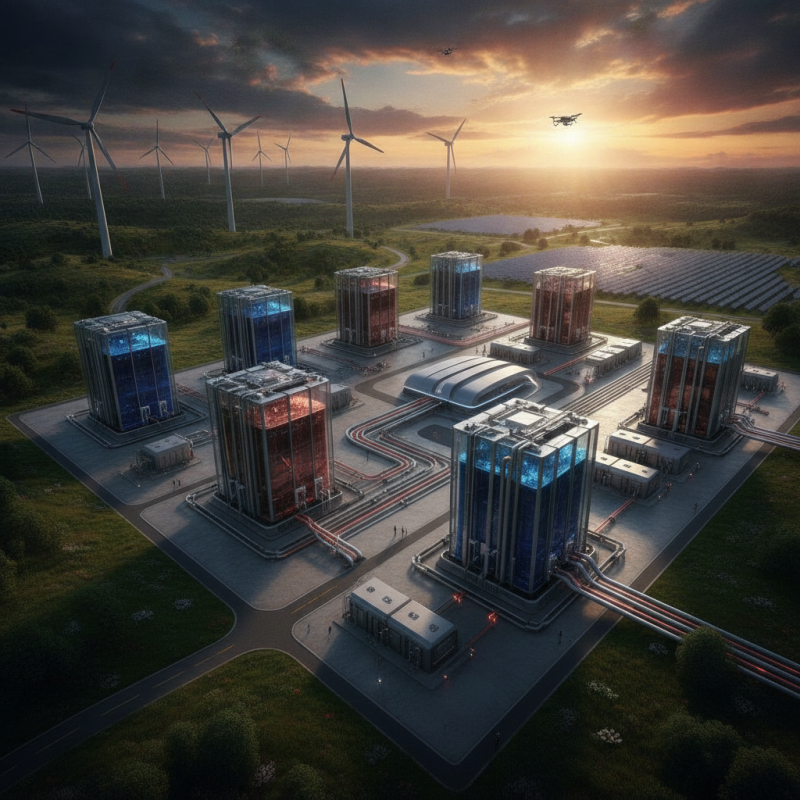
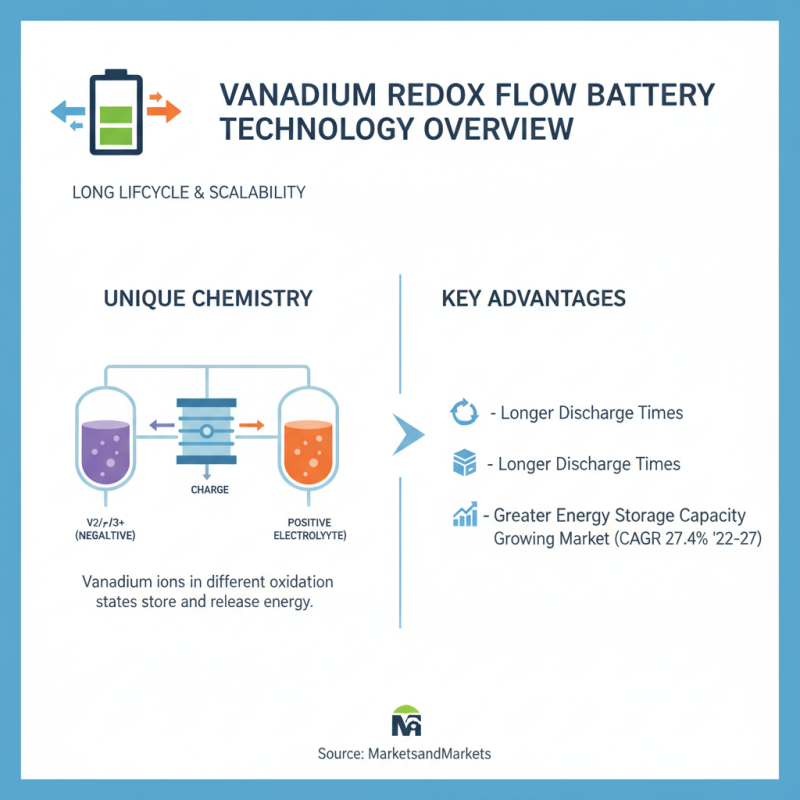
Vanadium Redox Flow Battery (VRFB) technology is gaining traction due to its long lifecycle and scalability. Unlike traditional batteries, VRFBs use vanadium ions in different oxidation states. This unique chemistry allows for longer discharge times and greater energy storage capacity. A report by MarketsandMarkets indicates that the global VRFB market is expected to grow significantly, with a projected CAGR of 27.4% from 2022 to 2027.
One notable advantage is the environmental sustainability of VRFBs. The technology facilitates energy storage without toxic materials, unlike many conventional batteries. An analysis by the International Renewable Energy Agency highlights that VRFBs can operate effectively for over 10,000 cycles. This exceptional cycle life reduces the frequency of replacements, thus lowering overall costs in the long run. However, initial setup costs can still be a concern for some users.
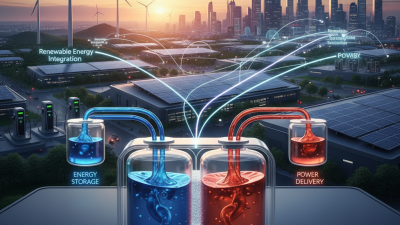
Integration with renewable energy sources is another critical benefit. VRFBs can efficiently store surplus energy generated from solar or wind sources. This characteristic is vital for enhancing grid stability. Yet, achieving widespread adoption requires further advancements in technology and public awareness. Continued research aims to address these challenges, but the road ahead isn’t without its hurdles.
Vanadium redox flow batteries (VRFBs) are gaining attention for their unique capabilities in energy storage. One key advantage is their scalability. These systems can be easily expanded to meet growing energy demands. This flexibility makes them suitable for various applications, from residential setups to large grid installations.
Another important benefit is their longevity. VRFBs can last over 20 years with minimal maintenance, significantly reducing replacement costs. The use of vanadium ensures that the battery can be fully discharged without damage. This makes them particularly beneficial for renewable energy sources, which often encounter fluctuating production levels.
However, challenges exist. The initial investment for installing VRFBs can be high compared to traditional battery systems. This can be a barrier for some energy projects. Despite this, the long-term savings and environmental benefits often outweigh the upfront costs. Exploring these technologies further will help in understanding their full potential in sustainable energy solutions.
Vanadium redox flow batteries (VRFBs) showcase significant environmental benefits, making them a compelling choice for energy storage solutions. These systems utilize a non-toxic electrolyte, unlike lead-acid or lithium-ion batteries. This reduces harmful waste and eases the recycling process. A study by the International Renewable Energy Agency (IRENA) highlighted that the life cycle emissions of VRFBs are considerably lower than conventional batteries, thus favoring environmental sustainability.
The ability to store renewable energy is another advantage. With renewable resources on the rise, the need for effective storage solutions is critical. VRFBs can efficiently store excess energy from solar and wind sources. According to a report from Navigant Research, VRFBs can provide up to 70% of the energy required to stabilize grid fluctuations. This means lower fossil fuel dependence and reduced carbon footprints.
Tip: When considering energy storage, always look for solutions that prioritize sustainability. Assess the long-term environmental impacts of the technology.
Moreover, VRFBs offer a long cycle life, often exceeding 10,000 charge-discharge cycles. This durability translates to less frequent replacements, which minimizes material consumption over time. However, the initial investment may seem high compared to other storage technologies. It’s essential to weigh the long-term benefits against upfront costs for a well-rounded decision.
Tip: Research local regulations. Incentives for green technologies can significantly offset initial investments.
Vanadium redox flow batteries (VRFBs) are gaining attention in energy storage technology. Their unique design allows for flexible scaling and long cycle life. Reports suggest that VRFBs can last over 20,000 cycles. This is a significant advantage compared to lithium-ion batteries, which typically last about 2,000 cycles. The potential for longevity points to lower long-term costs in applications such as renewable energy integration.
When compared to other battery technologies, vanadium showcases numerous benefits. For instance, their high energy density and capacity for large-scale storage make them ideal for grid applications. According to the International Energy Agency, vanadium can store energy for longer periods, which is crucial for balancing intermittent renewable sources like solar and wind. Despite these advantages, VRFBs have a high upfront cost. This can deter some investors, but the long-term benefits often outweigh initial expenses.
The safety of VRFBs is another advantage over conventional lithium-ion systems. They are less prone to catching fire and have a non-explosive nature. This creates a safer environment for large installations. Critics may point to the limited supply of vanadium, raising concerns about scalability. However, new mining techniques and recycling processes are evolving, potentially addressing these challenges. The balance between advantages and limitations will shape the future of energy storage technology.
| Benefit | Description | Comparison with Other Technologies |
|---|---|---|
| Long Lifespan | Can last for over 20 years with minimal degradation. | Compared to lithium-ion batteries, which typically last 5-10 years. |
| Scalability | Easily scalable for larger energy storage needs. | Unlike solid-state batteries that have size limitations. |
| Safety | Non-flammable and less prone to catastrophic failure. | Safer than lithium-ion technologies which can catch fire. |
| Low Environmental Impact | Vanadium is abundant and recyclable. | Better than lead-acid and lithium-ion in terms of recycling. |
| Discharge Flexibility | Can discharge energy over long periods without losing efficiency. | More advantageous than traditional batteries which discharge quickly. |
| Efficiency | High round-trip efficiency of about 75-85%. | Competitive with lithium-ion but lower than supercapacitors. |
| Rapid Response | Immediate response to load changes. | Faster than some other storage technologies. |
| Cost-Effectiveness | Lower total cost of ownership over time. | More economical than lead-acid with better longevity. |
| Grid Stability | Supports renewable energy integration into the grid. | Essential for managing variability unlike traditional generators. |
| Multipurpose Use | Can be used for various applications from residential to industrial. | More versatile compared to specialized battery systems. |
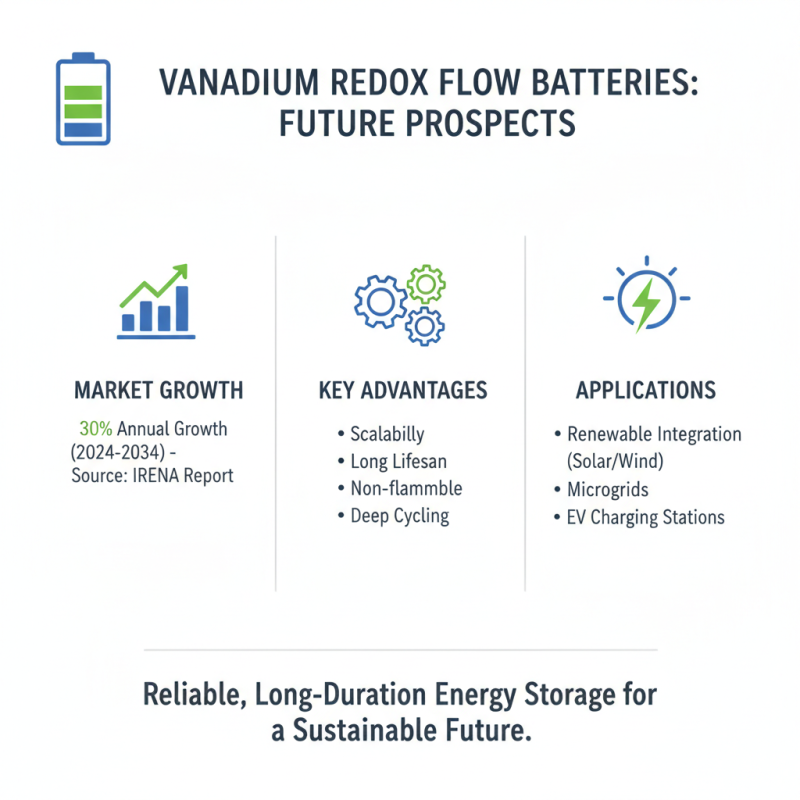
Vanadium Redox Flow Batteries (VRFBs) show significant potential for energy storage. As the energy landscape evolves, these batteries provide unique advantages. Their scalability allows for installation in various sizes, facilitating integration with renewable sources. According to a report by the International Renewable Energy Agency, the VRFB market is expected to grow by 30% annually over the next decade. This growth highlights the increasing demand for reliable energy storage solutions.
Future prospects for VRFBs depend on advancements in technology and materials. Researchers are exploring new electrolytes to enhance efficiency and reduce costs. Recent studies indicate that new designs could increase energy density by up to 25%. However, challenges remain. Current systems still face limitations in energy conversion efficiency, sometimes dropping below 70%. Addressing these issues will be crucial to fully unlocking their potential.
Investment in R&D is vital for the next phase of VRFB innovation. Collaboration between academia and industry can accelerate breakthroughs. Reports suggest that with improved components, the lifespan of VRFBs could surpass 15 years, making them more competitive with traditional lithium-ion batteries. Continual evaluation and adaptation will be essential as the market evolves, ensuring VRFBs can meet future energy demands effectively.